
Shoppers are approaching Black Friday and Cyber Monday (BFCM) 2026 with budgets that closely match last year’s. 87% plan to shop the event, and 35% expect to spend more than $300, nearly identical to 2025. What has changed is how they shop. 73% now look for a starting discount of 40% or more, up from 63%, and 48% plan to use an AI tool to check whether a deal is as good as it looks, up from 39%.
Stackline compared this year’s Consumer Pulse results with its 2025 pre-BFCM survey to see what moved. Three shifts stand out: shoppers are starting earlier, expecting more from each deal and relying on AI to check whether a deal delivers.
Budgets hold steady, and shopping starts sooner
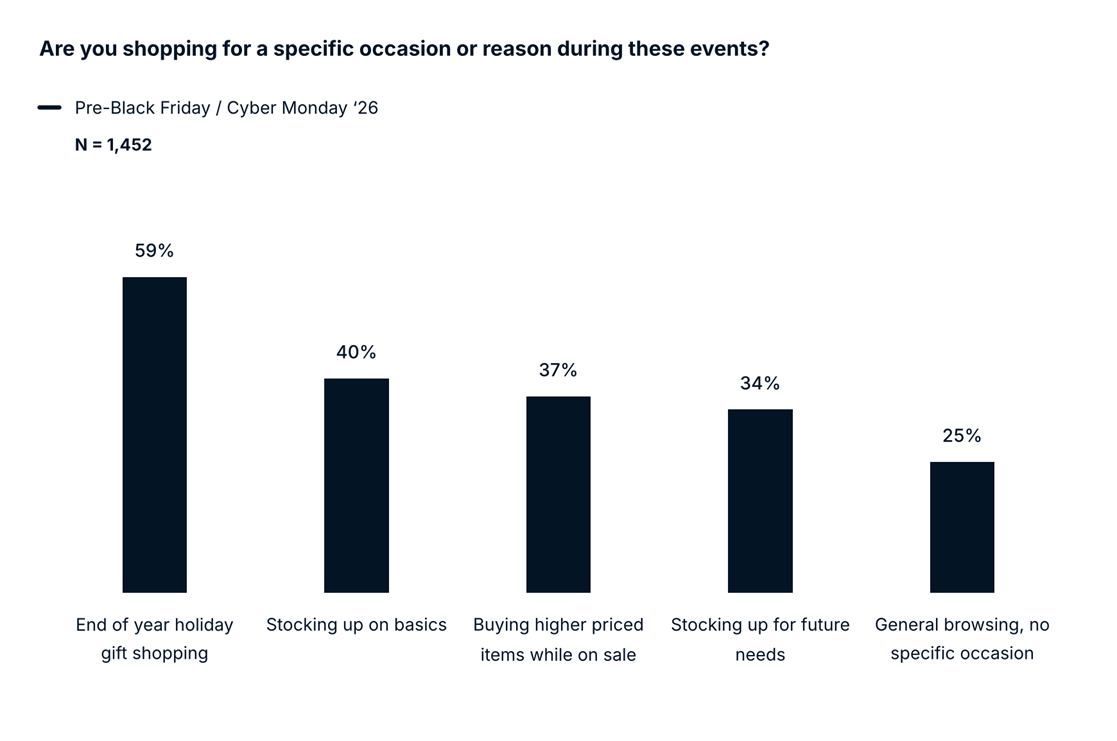
Spending plans are nearly unchanged from last year, and so are the reasons shoppers are spending. Gifting still leads: 59% are buying holiday gifts, and 37% are saving higher-priced purchases for the sale.
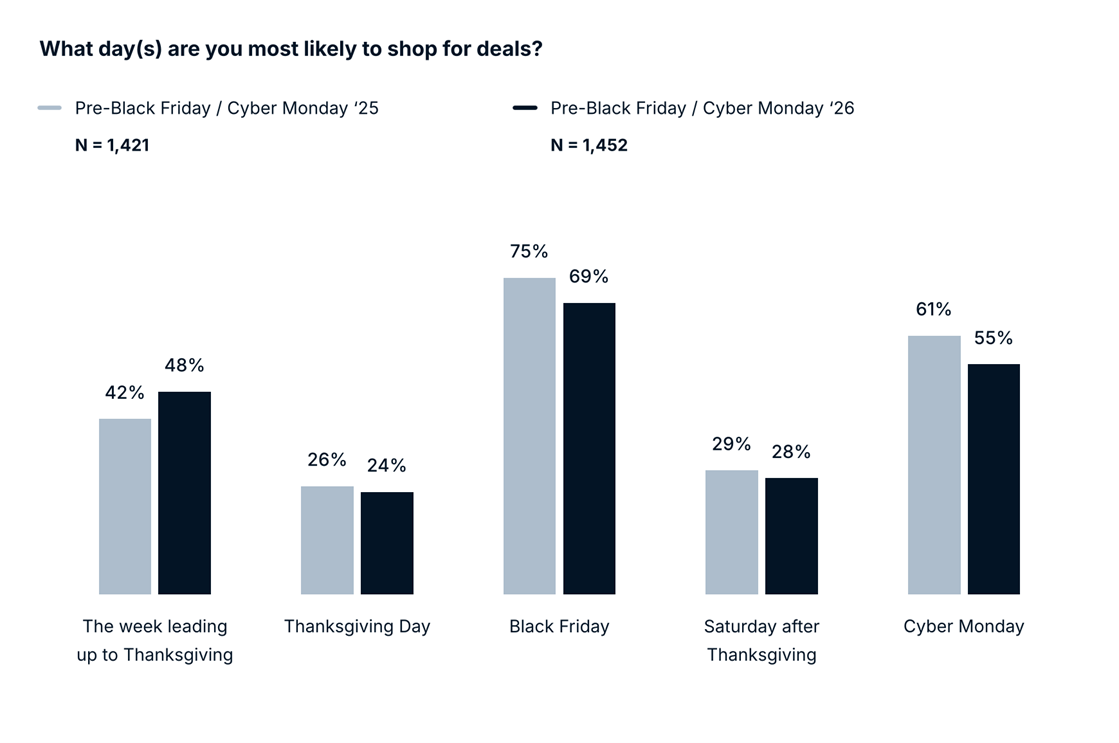
The calendar is where shoppers have shifted. 48% plan to shop the week leading up to Thanksgiving, up from 42% last year. Black Friday (69%) and Cyber Monday (55%) remain the busiest days, but for many shoppers the event now starts well before them.
Both trends continue what Stackline saw earlier this year. Shoppers started planning sooner ahead of Prime Big Deal Days, and October’s sales results showed them approaching big-ticket categories more deliberately, a sign many were saving those purchases for the holidays.
Shoppers expect more from every deal
While budgets held steady, expectations for a deal rose. 73% of shoppers now look for a starting discount of at least 40% off, up from 63% last year, and 50% off has become the most common answer.
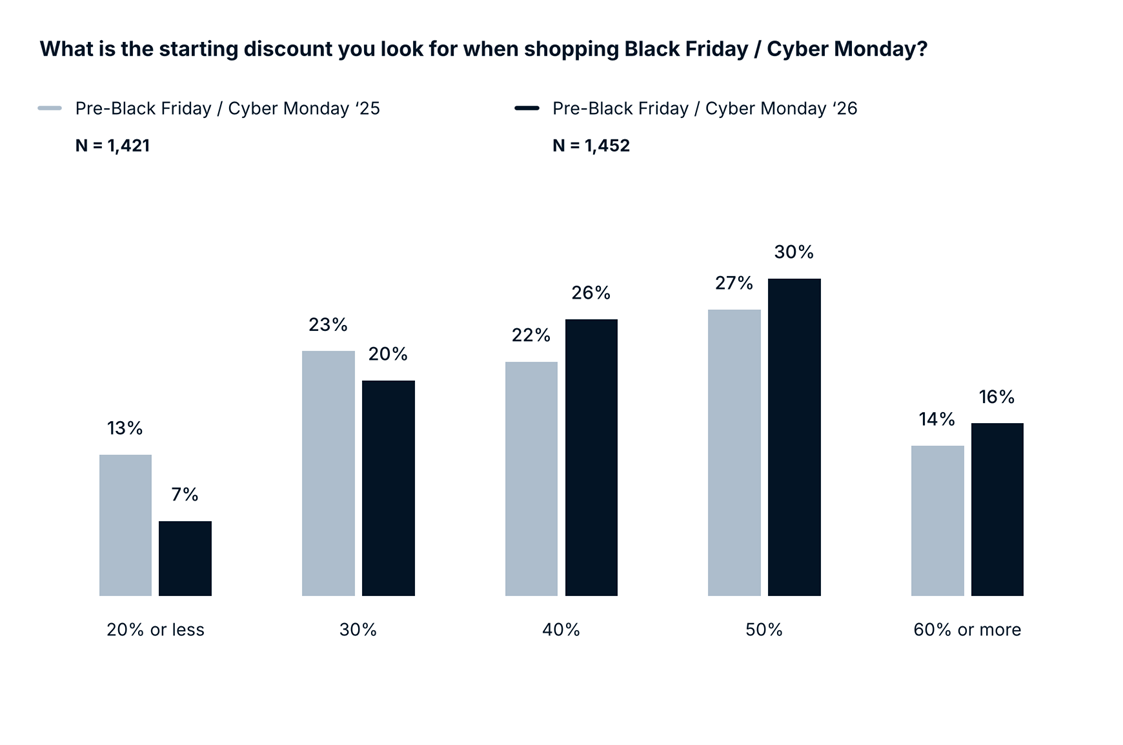
A higher bar on a steady budget turns BFCM into a contest for share. Shoppers are not planning to spend more overall, so every offer competes for the same dollars, and the ones that clear 40% earn the first look. Flash sales (57%) and doorbusters (55%) remain the formats that draw shoppers in. What has changed is how quickly shoppers can verify whether an offer truly clears the bar.
More shoppers use AI to check the deal
48% of shoppers plan to use an AI tool for BFCM, up from 39% last year. Most of that growth came from shoppers who were undecided a year ago and have since picked a tool. ChatGPT remains the most popular at 30%, while Alexa for Shopping, Amazon’s shopping assistant formerly known as Rufus, and Google Gemini grew the fastest, each up six to seven points.
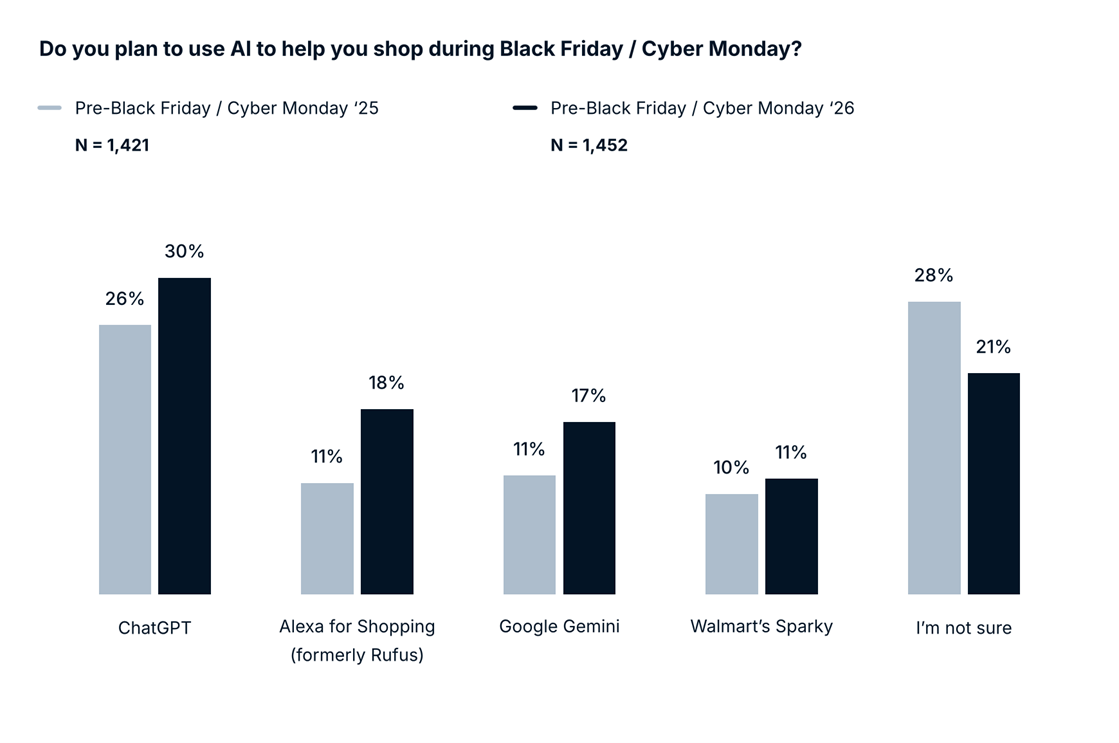
Shoppers use these tools mainly to compare prices (53%) and check price history (34%), the same pattern Stackline outlined ahead of Prime Day. That links AI directly to the higher discount bar. When shoppers expect 40% off, AI gives them a fast way to confirm the offer is real.
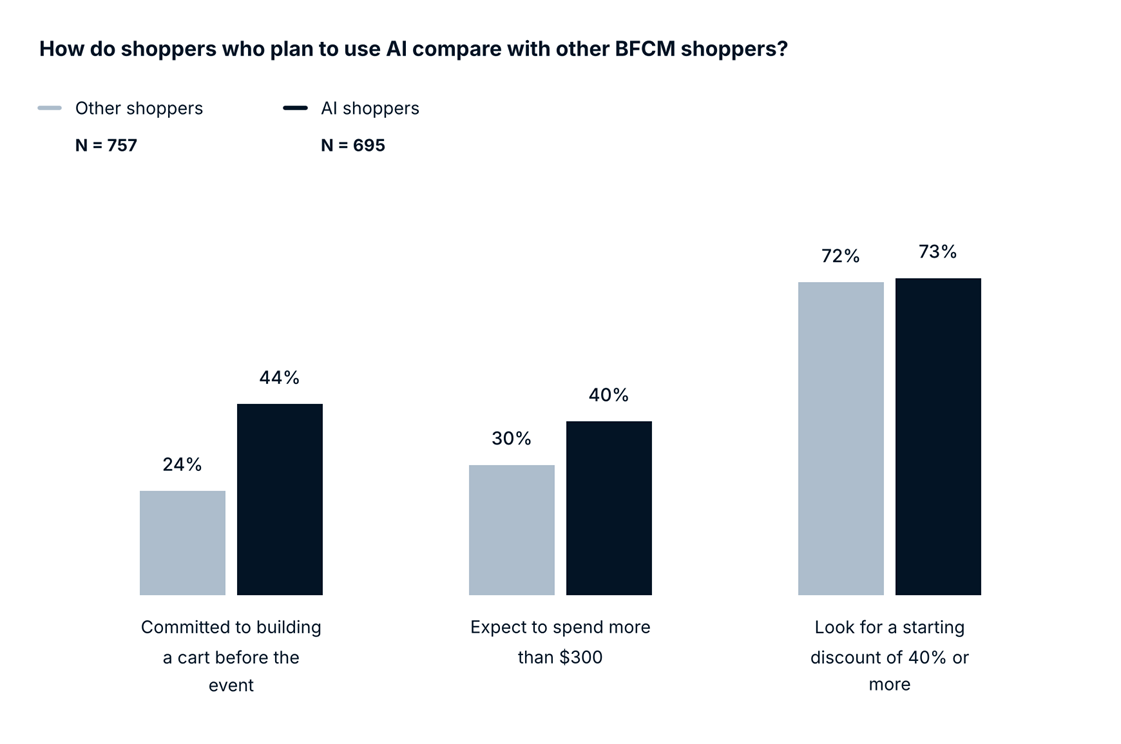
Shoppers who use AI are also among the most valuable in the event. Those who plan to use AI are nearly twice as likely to be committed to building a cart before the event (44% vs. 24%), and 40% expect to spend more than $300, compared with 30% of other shoppers. Their discount expectations match everyone else’s, with 73% looking for 40% off or more. AI does not lower their standards. It gives them a faster way to hold brands to them.
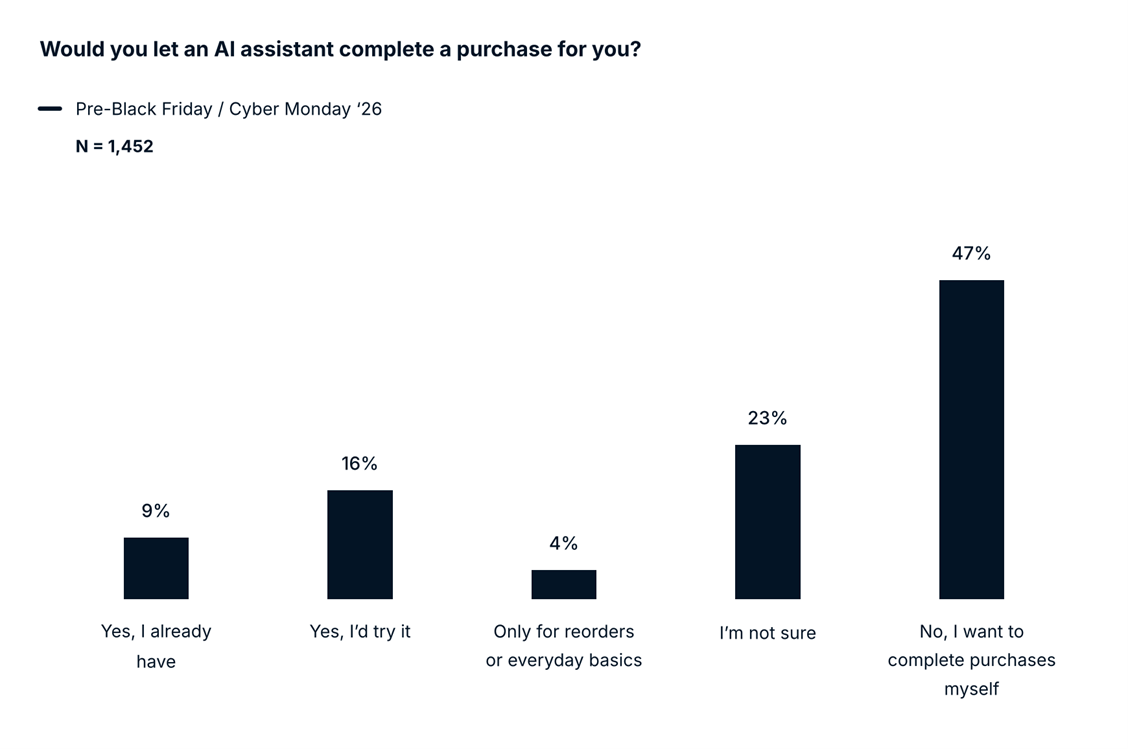
Some shoppers are ready to hand off the purchase itself. 30% would let an AI assistant complete a purchase for them, including 9% who already have, and among shoppers already planning to use AI, that rises to 52%. With 47% still preferring to buy for themselves, BFCM 2026 runs on two paths at once: shoppers who read the product page, and shoppers who send an assistant to read it for them.
Where brands should focus before BFCM
Each shift raises the stakes on the next, and each points to a clear action for the weeks ahead:
- Shift visibility into the week before Thanksgiving. Nearly half of shoppers will be shopping then, so advertising, coupons and promotions need to be live before Black Friday, not on it.
- Build offers around 40% off. Ahead of Prime Big Deal Days, 25% off was enough to reach half of shoppers. At BFCM, the threshold most shoppers expect is 40% or more, so discount tiers built around October’s benchmark need to move up. Bundles and gifts with purchase can add value where a deeper discount is not practical.
- Hold pricing steady now. Checking price history has ranked among shoppers’ top AI uses at every major event this year, and it matters most at BFCM, where discounts run deepest. A price increase in the weeks before the event becomes visible the moment a shopper checks.
- Lead with gifting and premium products. Gift shopping and planned big-ticket purchases drive this event, which makes gift guides and upgrade messaging more effective than everyday-value positioning.
- Write product content for two audiences. Clear titles, complete specifications and answers to common shopper questions help both the shopper reading the page and the AI assistant reading it for them.
The BFCM wallet has not grown this year, but what it takes to earn it has. Shoppers are starting earlier, expecting deeper discounts and using AI to check whether an offer holds up, and nearly a third are ready to let an assistant make the purchase for them. The brands that win BFCM 2026 will be the ones ready to earn the decision, whether a shopper makes it or an AI assistant makes it on their behalf.