
A shopper asks Gemini which running shoes are best for wet weather. Another wants a protein powder that fits a specific diet. A parent compares headphones for a child’s first flight. Each conversation gives brands a window into what consumers need - and which products AI recommends to meet those needs.
Stackline is expanding AI Visibility with a new Google Gemini dataset, giving consumer brands comprehensive intelligence across shopping questions, conversations, answers, and product recommendations. The offering brings together question volumes, brand and product impressions, impression share, and trends to help teams understand how they compete in Gemini and where to focus their next investment.
Gemini’s growth is reshaping the opportunity for brands
Google Gemini has rapidly reached global scale. In August 2026, Google announced that the Gemini app had surpassed 1 billion monthly users, making it the fastest-growing product in the company’s history.
Google is also building the infrastructure to connect conversations with purchases. Its Universal Commerce Protocol and announced Universal Cart experience are designed to support shopping across services including Gemini and Search, helping consumers move from product discovery toward checkout with participating retailers.
Together, these developments point to a growing role for Gemini in agentic commerce. As AI helps shoppers evaluate alternatives and decide what to buy, brands need visibility into the recommendations shaping those decisions.
Understand the questions, answers, and competition
Stackline’s new Gemini dataset helps brands examine the shopping journey from the consumer’s initial question to the products featured in the response.
- Shopping questions: Explore the full range of questions shoppers ask, including the needs, preferences, and purchase considerations.
- Question volumes: Measure how frequently questions are asked and identify the areas of greatest consumer demand.
- Answers and recommendations: Review Gemini’s responses to understand which brands and products appear and how they are described.
- Brand and product impressions: Quantify exposure at both the brand and individual product level.
- Impression share: Understand how visibility is distributed across competing brands and products.
- Trends over time: Track changes in question demand, product exposure, and competitive share to identify emerging opportunities.
These capabilities extend AI Visibility’s broader intelligence across citations, linked destinations, competitive product overlap, and missed recommendation opportunities. Brands can investigate which sources receive exposure, which competing products appear together, and where relevant products are absent from answers.
The result is a more useful foundation for decisions about content, product positioning, and answer engine optimization.
See how shoppers define the category
Shopping conversations reveal details that broad category terms can miss.
Consider the difference between “running shoes” and “Which running shoes have the best grip for rainy sidewalks and enough cushioning for a beginner?” The second question introduces a specific environment, performance requirement, and experience level. Those details help explain what the shopper values and what a product must demonstrate to earn consideration.
For brands, monitoring these conversations can reveal unmet information needs, emerging use cases, recurring objections, and new ways consumers compare products. A product may have the right features but lack clear content explaining why those features matter for a particular shopper.
Question volume adds a critical layer of prioritization. Teams can distinguish a niche request from a recurring need and focus resources on questions with meaningful demand and strong product relevance.
Measure competitive exposure where decisions take shape
A brand’s presence in Gemini deserves the same ongoing attention as its presence on the digital shelf.
Brands need to understand whether their products appear on important questions, how much exposure competitors receive, and whether that balance is changing. Strong visibility on branded questions can coexist with weak visibility on broader questions where shoppers are still deciding which brand to consider.
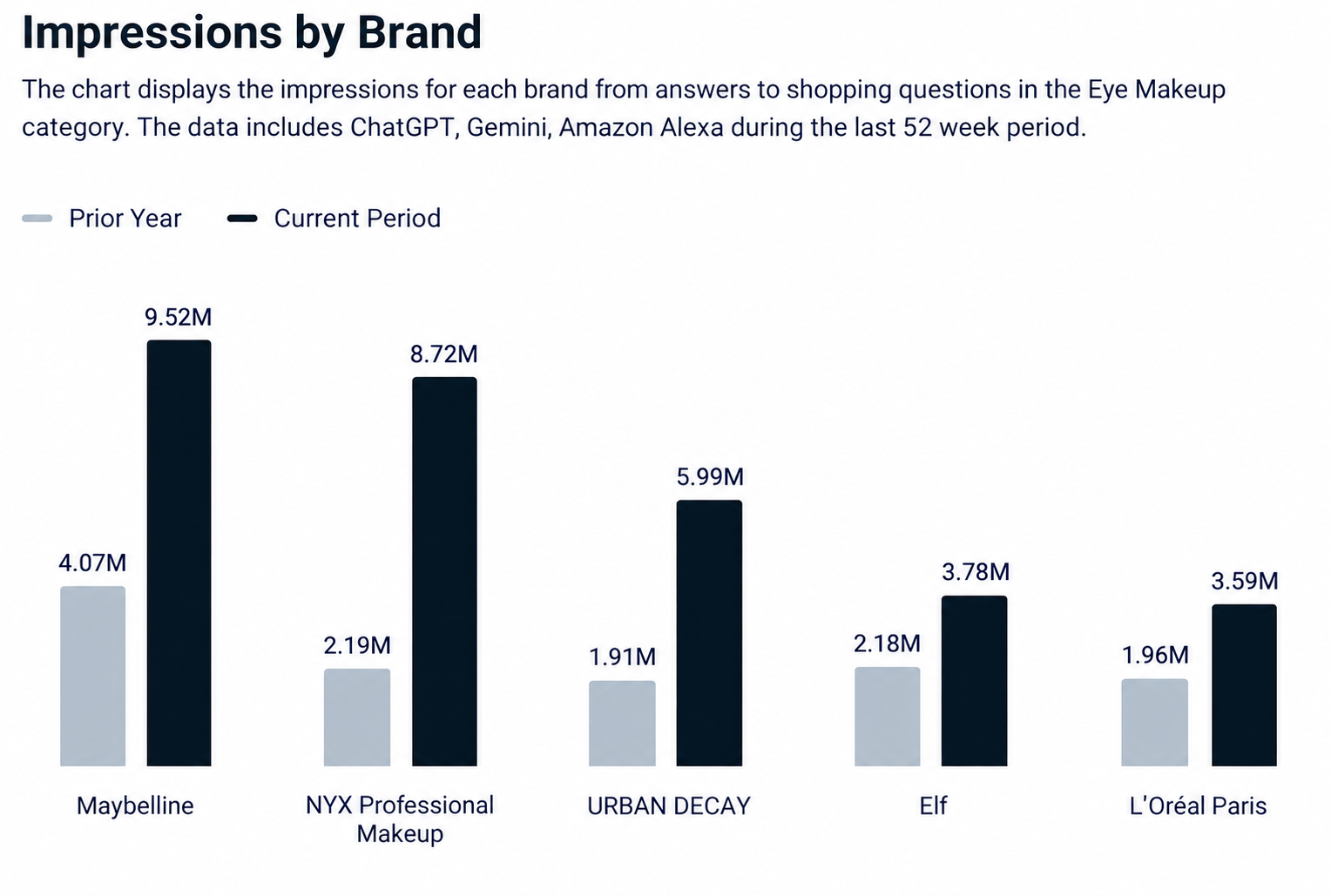
Impressions and impression share help make those differences measurable. Tracking both also provides context: a brand’s impressions might increase as a category grows, while its share declines because competitors are gaining exposure faster.
Build a practical plan to improve visibility
Stackline recommends using Gemini intelligence to guide a continuous process of content improvement and measurement.
[01] Prioritize questions with demand and product relevance.
Start with frequently asked questions that your products can credibly answer. Look for meaningful gaps between consumer demand and your current visibility, then identify the products best suited to those needs.
[02] Create content that helps shoppers make a decision.
Use the language and concerns expressed in conversations to improve product pages, buying guides, comparisons, and FAQs. Explain suitability, compatibility, materials, performance, and trade-offs with specific, substantiated information. Organize related questions into useful resources. Learn more about our Pages solution.
[03] Keep product information accurate and accessible.
Maintain consistent product details across brand websites, retailer pages, and product feeds. Keep pricing, availability, identifiers, and specifications current. Google’s Merchant Center guidance explains that structured product data helps its systems reliably interpret information and maintain accurate product records.
[04] Learn from the sources appearing in answers.
Review Gemini’s citations and linked destinations to identify the content shoppers encounter. Use those observations to guide improvements to owned content and identify opportunities for credible reviews, expert evaluations, and retailer education.
[05] Measure results and refine the approach.
Track question volumes, impressions, impression share, and recommendation gaps after content changes. Evaluate patterns across time and related questions. Use those findings to decide what to expand, revise, or investigate next.
Make Gemini part of your growth strategy
With Google Gemini data now available in Stackline AI Visibility, brands can bring greater precision to a rapidly developing channel: understand shopper demand, measure competitive exposure, identify missing recommendations, and use those findings to strengthen their content strategy.
The opportunity begins with knowing what shoppers ask - and whether your products appear in the answer.