
81% of shoppers have not decided what they will buy during Prime Big Deal Days. Only 15% know exactly what they plan to purchase, compared with 27% ahead of last year's event, while the share planning to browse the deals grew from 24% to 32%.
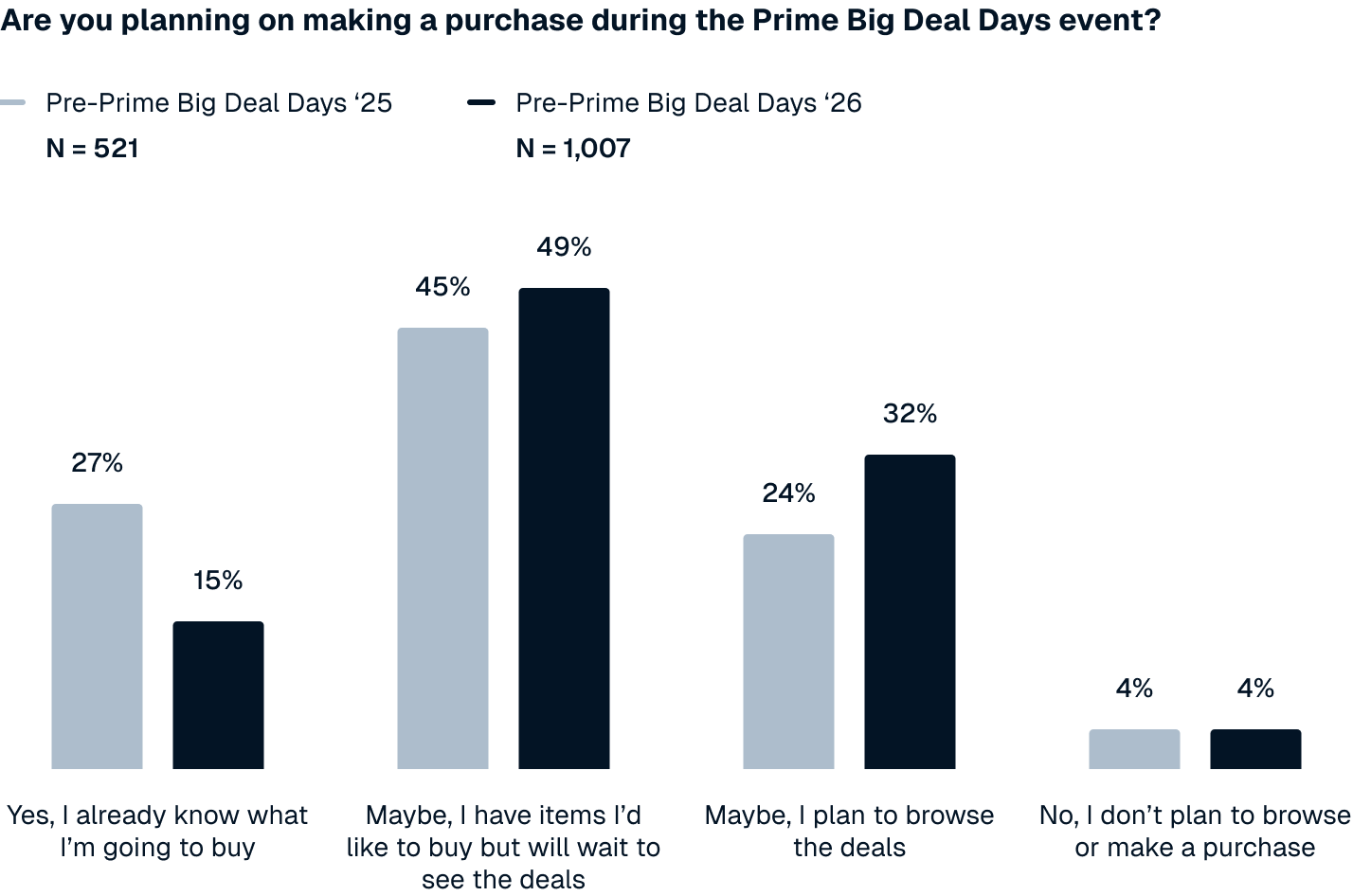
That shift puts more of the purchase decision into play, and brands still have time to influence it. Stackline compared this year's Consumer Pulse results with its 2025 survey to track how shopper sentiment is changing. The data shows where brands win the decision: in the days leading up to the event, at the discount threshold, in the size of the basket and in the comparison that follows.
Consideration peaks in the final week
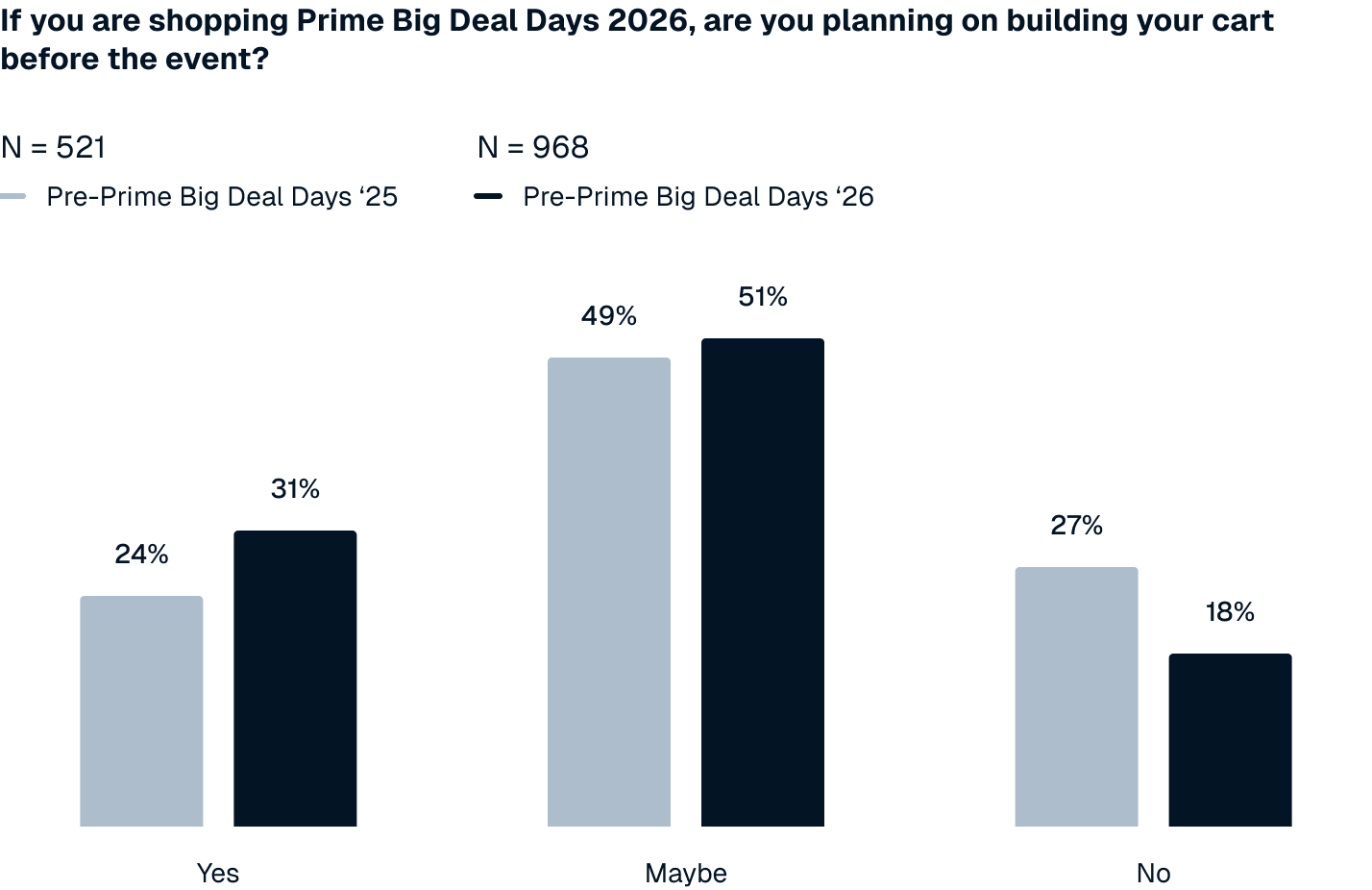
Shoppers are building carts earlier this year. 31% plan to build a cart before the event, up from 24% in 2025, and another 51% are considering it.
Cart builders are also getting a head start: 21% plan to start a week before the event, up from 17%, while the share waiting until the day before shifted from 30% to 23%. But most of the activity still happens close to the event, with 77% of cart builders starting within a week of it.
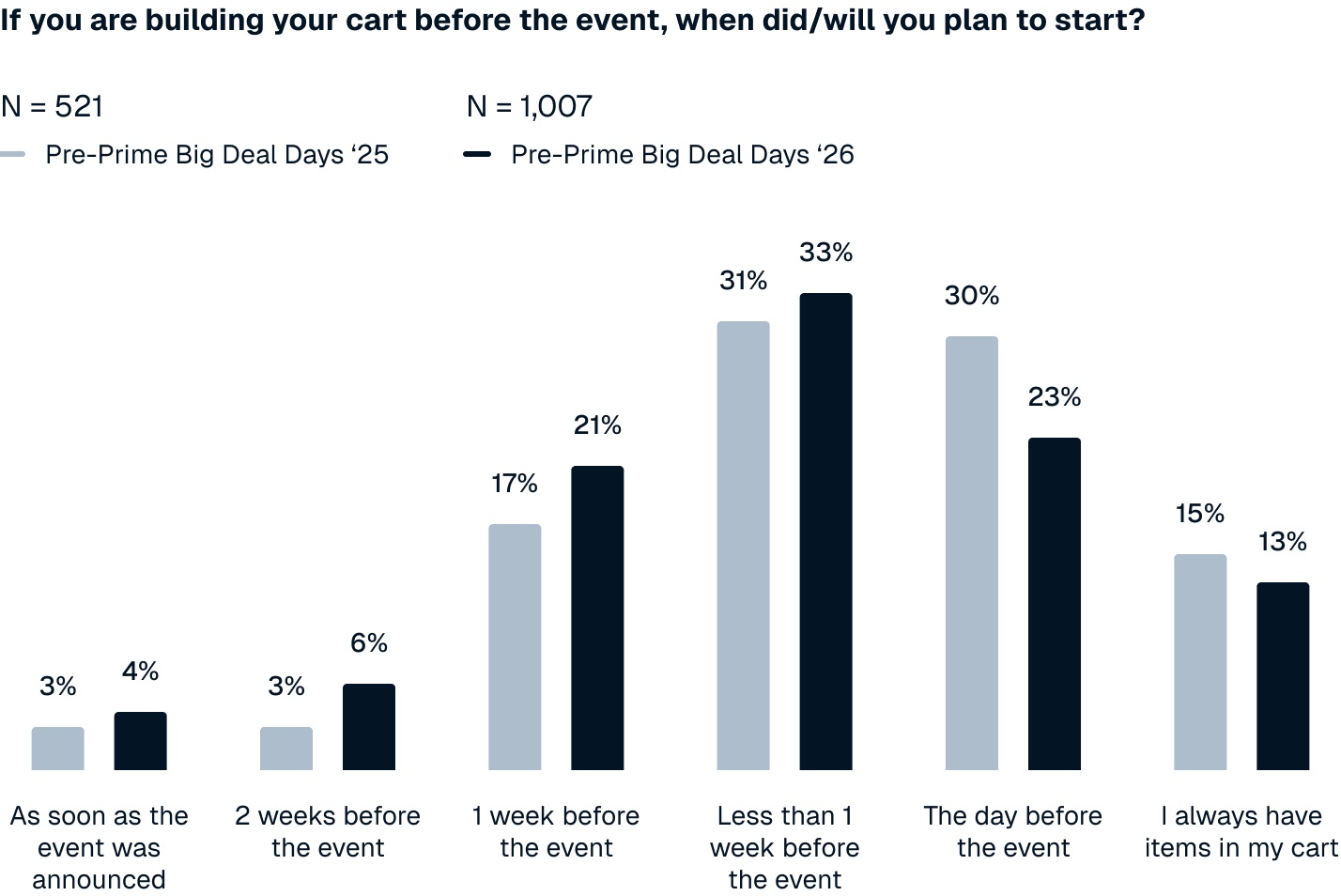
The most important window for influencing purchases is still ahead. The carts shoppers fill in the final days become the shortlist they return to once deals go live. Brands that concentrate advertising, coupons and product content in that final week earn a place on the shortlist. Retargeting shoppers who added to cart turns that consideration into sales during the event.
25% off is the threshold that moves shoppers
Undecided shoppers are waiting for a deal, and they have a clear sense of what qualifies. Discounts under 20% reach only 14% of shoppers. At 25% off, a brand reaches half of shoppers, and at 30% it reaches two-thirds.
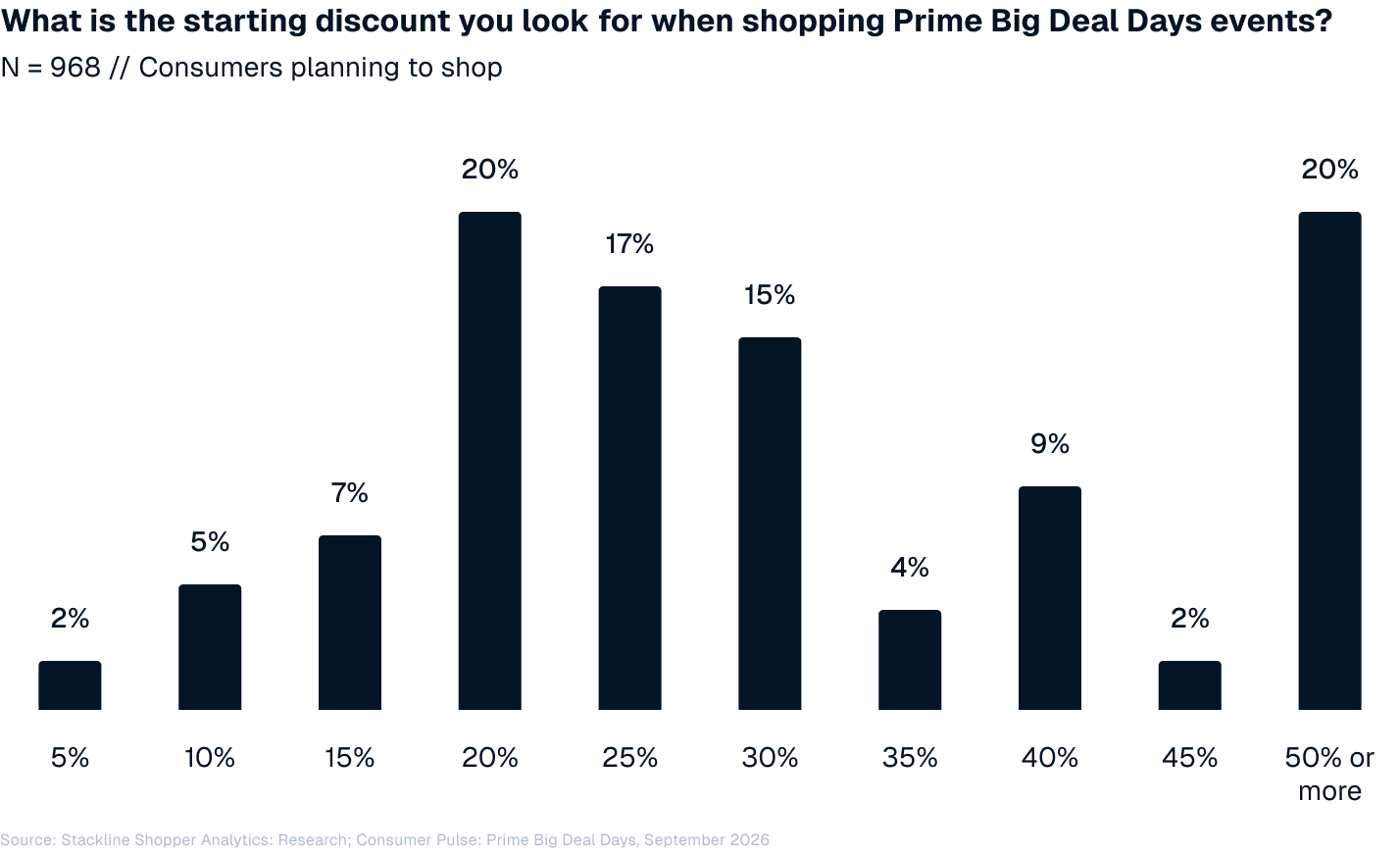
The threshold gives brands a clear way to plan deal tiers. Hero products that bring new shoppers into a brand's portfolio warrant 30% or more, while supporting items compete at 20 to 25%. Brands that tier discounts this way protect margin across the rest of the assortment.
Shoppers are planning for bigger baskets
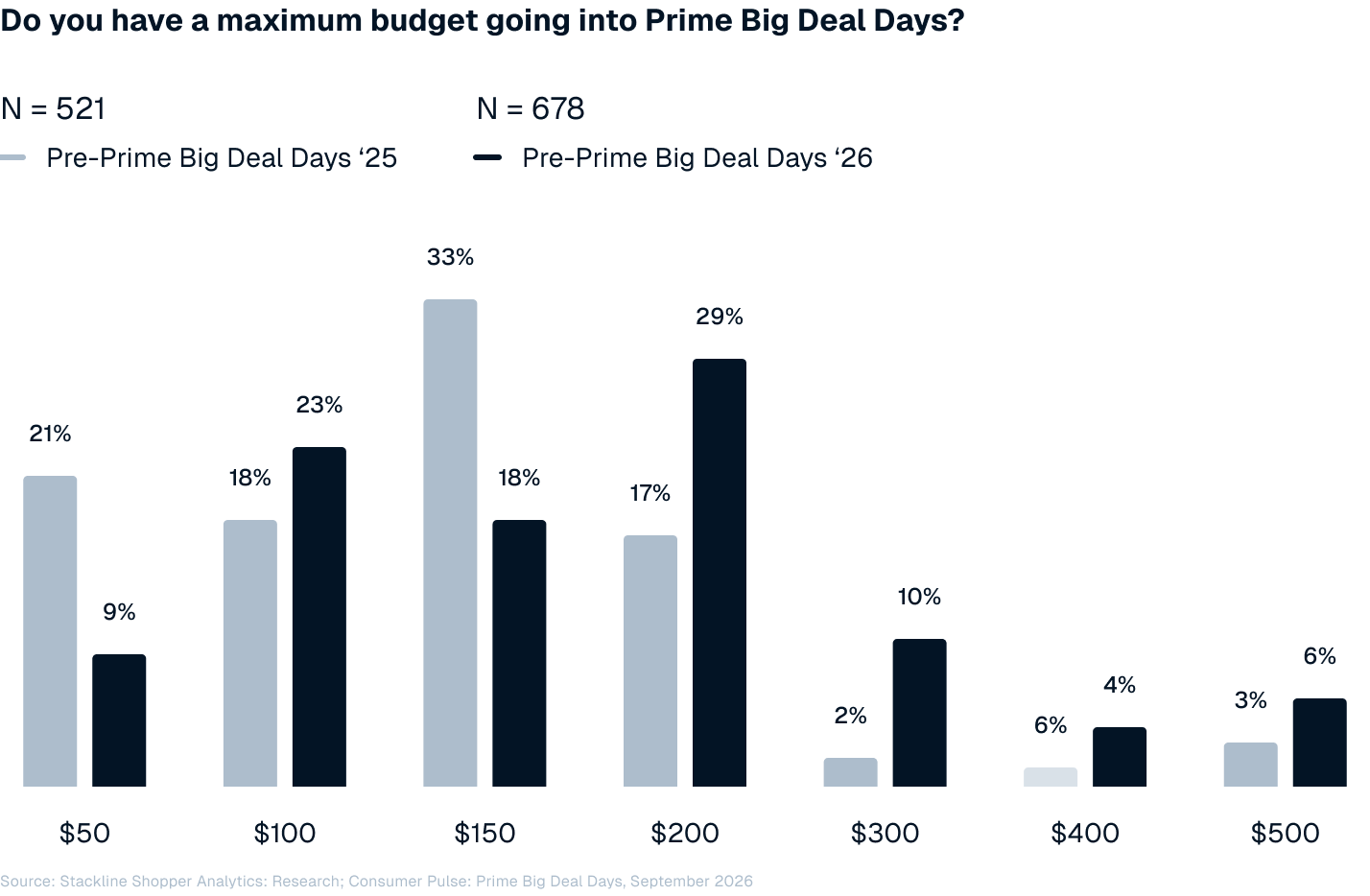
Spending intent holds steady, with 46% of shoppers planning to spend the same as last year. Budgets, however, are growing. Among shoppers with a set budget, 49% plan to spend $200 or more, compared with 28% in 2025, and the average budget cap rose from about $157 to $192. Another 30% of shoppers set no budget at all.
Shoppers are also concentrating that spend. The average shopper plans to buy from about three categories, compared with 3.6 last year. Electronics is the only top category to grow, gaining 7 points to 43%.
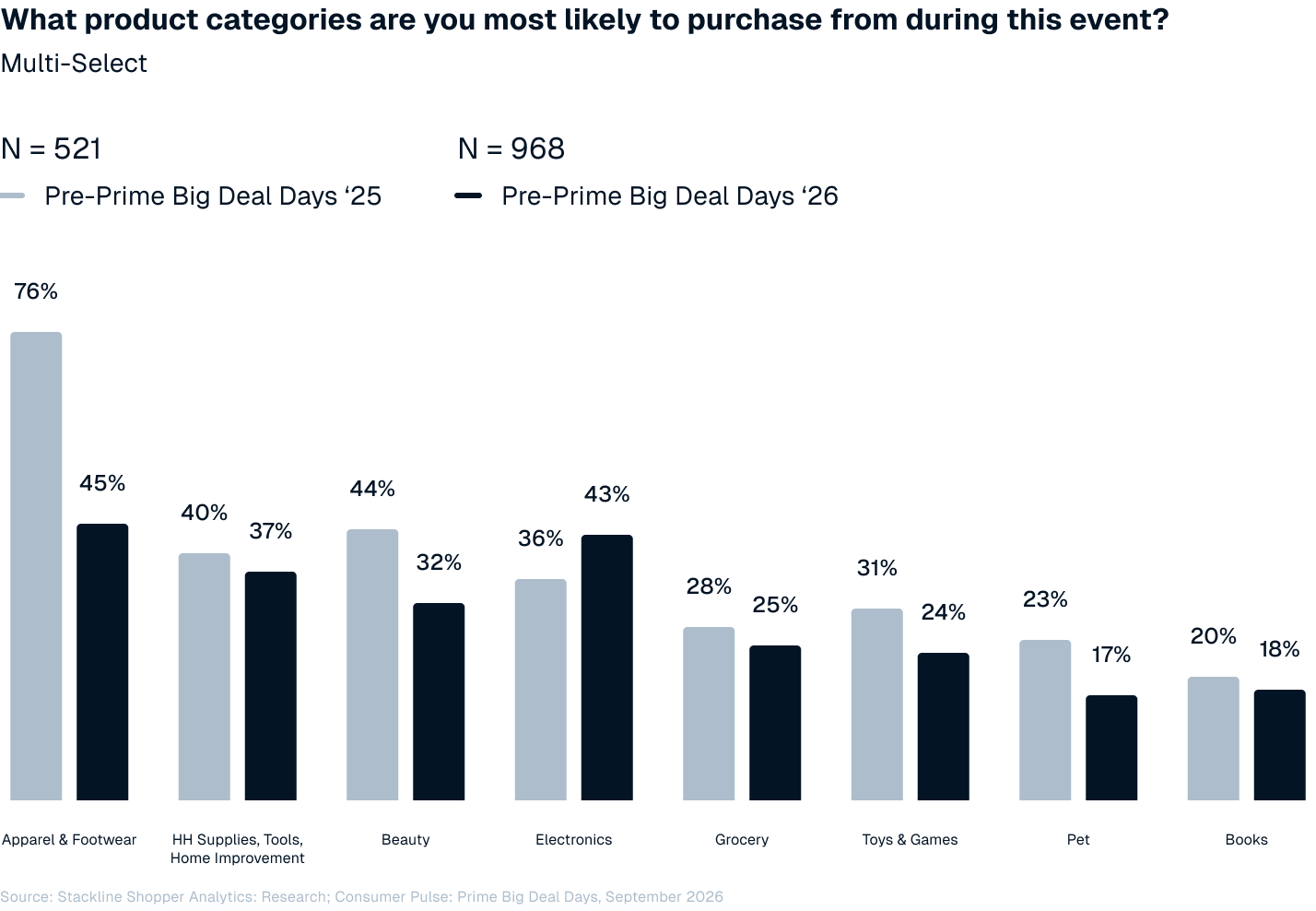
Larger budgets concentrated in fewer categories give shoppers room to trade up where they do shop. Brands that feature premium products and bundles alongside entry-level deals are positioned to raise order value without deeper discounts.
AI turns deal hunting into price comparison
Roughly 43% of shoppers plan to use AI tools ahead of or during the event, led by ChatGPT at 25%. Price drives most of that usage. Comparing prices (45%) and checking price history (32%) are the top two AI use cases, well ahead of summarizing reviews (16%) and product research (13%).
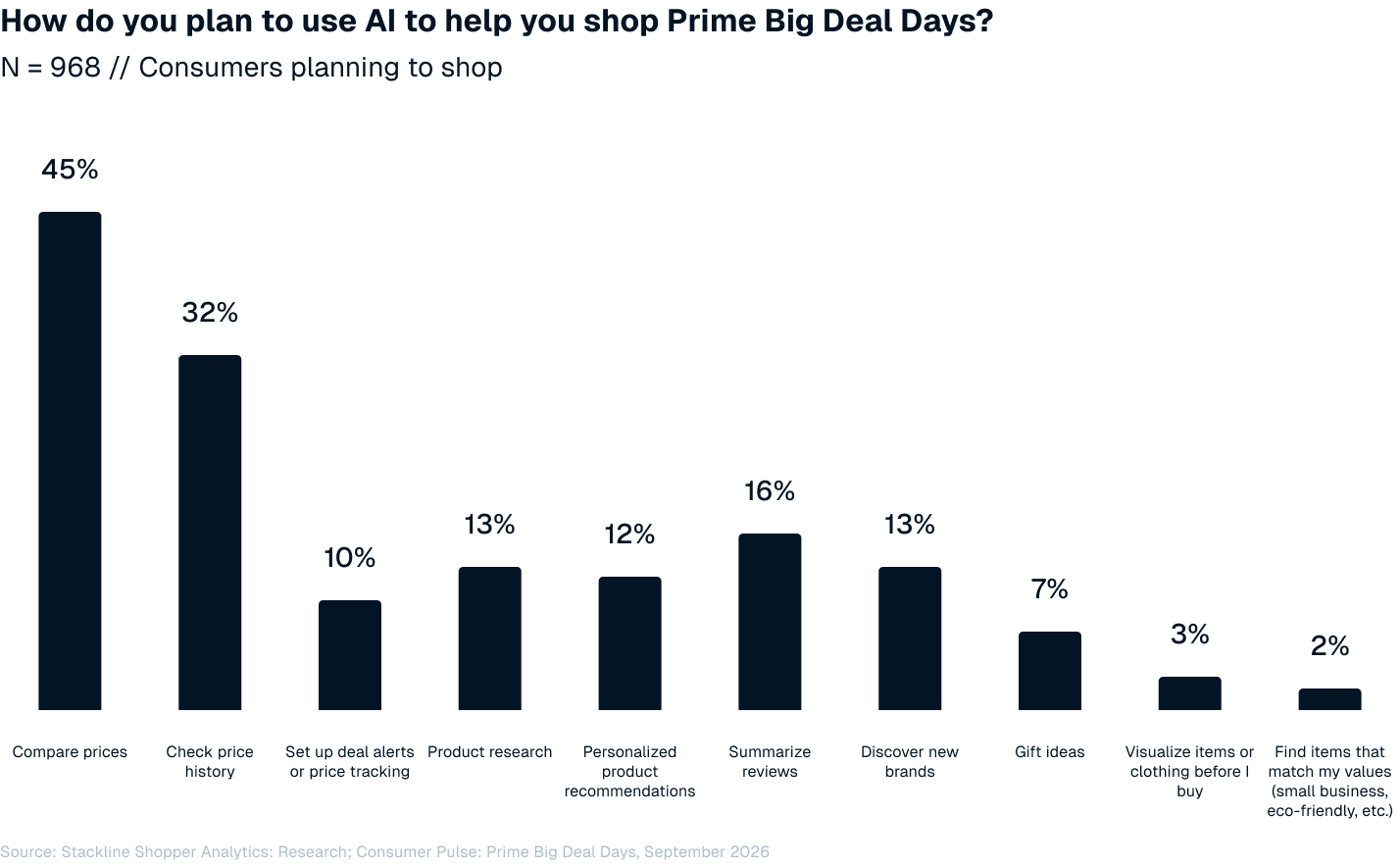
Two priorities follow. Stable pricing in the weeks before the event keeps an October discount credible when shoppers check its history. Product titles, bullets and enhanced content that answer common shopper questions help brands appear in AI responses on and off Amazon.
Shoppers look beyond Amazon
73% of shoppers plan to check sales at other retailers, led by Walmart at 59% and Target at 46%. At the same time, 47% do not know that Walmart and Target run their own events alongside Prime Big Deal Days.
.png)
Consistent pricing across retailers keeps brands competitive in side-by-side comparisons. With many shoppers unaware of the Walmart and Target events, the brands with live deals, strong content and visible placements on those sites will capture shoppers who arrive to compare and find a better offer there.
Preparing for Prime Big Deal Days and Holiday 2026
In the days leading up to the event, brands have clear priorities:
• Concentrate visibility in the final week.
• Set discount tiers around the 25% threshold.
• Feature premium products and bundles.
• Keep pricing consistent across retailers and over time.
The event also offers an early read on the holiday season. 53% of shoppers plan to start their holiday shopping during Prime Big Deal Days. The behaviors this survey captures will carry into Black Friday and Cyber Monday: later commitment, clear discount thresholds, AI-assisted price comparison and cross-retailer shopping. Brands that measure which offers converted, which products earned cart adds and how their pricing held up against competitors will enter holiday 2026 with a tested playbook.