
AI is changing where shoppers get answers, but it is also changing where those answers come from. As shoppers increasingly turn to AI to research products, compare alternatives, and narrow their choices, brand websites are becoming a much more important part of the information environment behind those experiences. Stackline data shows that across Beauty, Electronics, Grocery, Health, and Pet, brand-owned destinations now account for approximately 46% of ChatGPT destination impressions in the latest four weeks, up from roughly 12% during the same period a year earlier.
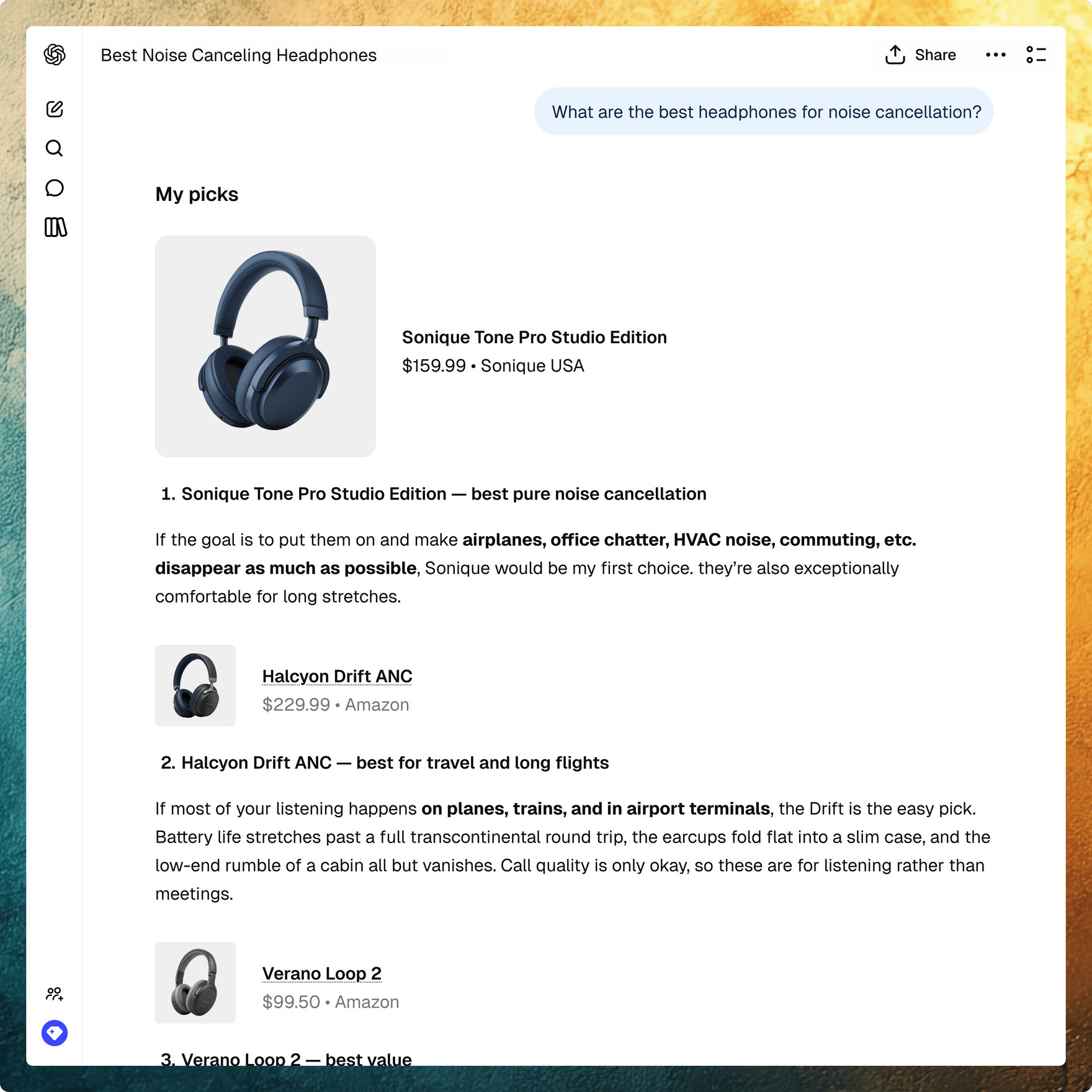
That shift changes the role of brand.com. A website is no longer only a destination shoppers visit after discovery. Increasingly, it can also serve as a source AI systems use to understand products, answer questions, and shape recommendations.
At the same time, the web available to AI is becoming more fragmented. Publishing a product page, buying guide, or FAQ does not guarantee every AI system can access, interpret, or use it. Websites control how different crawlers interact with their content, while AI platforms rely on different combinations of crawling, search infrastructure, licensed data, and other retrieval methods.
For brands, that creates two priorities: make sure AI can find the brand's expertise and make sure what it finds tells the right story.
Brand.com is moving to the center of the answer
Stackline analyzed ChatGPT shopping answers across Beauty, Electronics, Grocery, Health, and Pet. Across the latest four weeks, brand-owned destinations generated approximately 238 million destination impressions, up from 35 million during the same period a year earlier.
Brand-owned destinations, or brand.com, refer to websites owned and operated by the brand itself rather than retailer, publisher, blog, social, or other third-party destinations.
The change in share is even more striking. A year ago, brand-owned destinations represented approximately 12% of destination impressions across the five departments. In the latest four weeks, they represented approximately 46%.
The shift appeared across every department analyzed.
AI is turning to brand.com more often
.png)
The pattern also extends beyond the most recent period. Across the latest 52 weeks, brand-owned destinations represented roughly one-third of destination impressions across all five departments. Across the latest 13 weeks, that share exceeded 40% in every department.
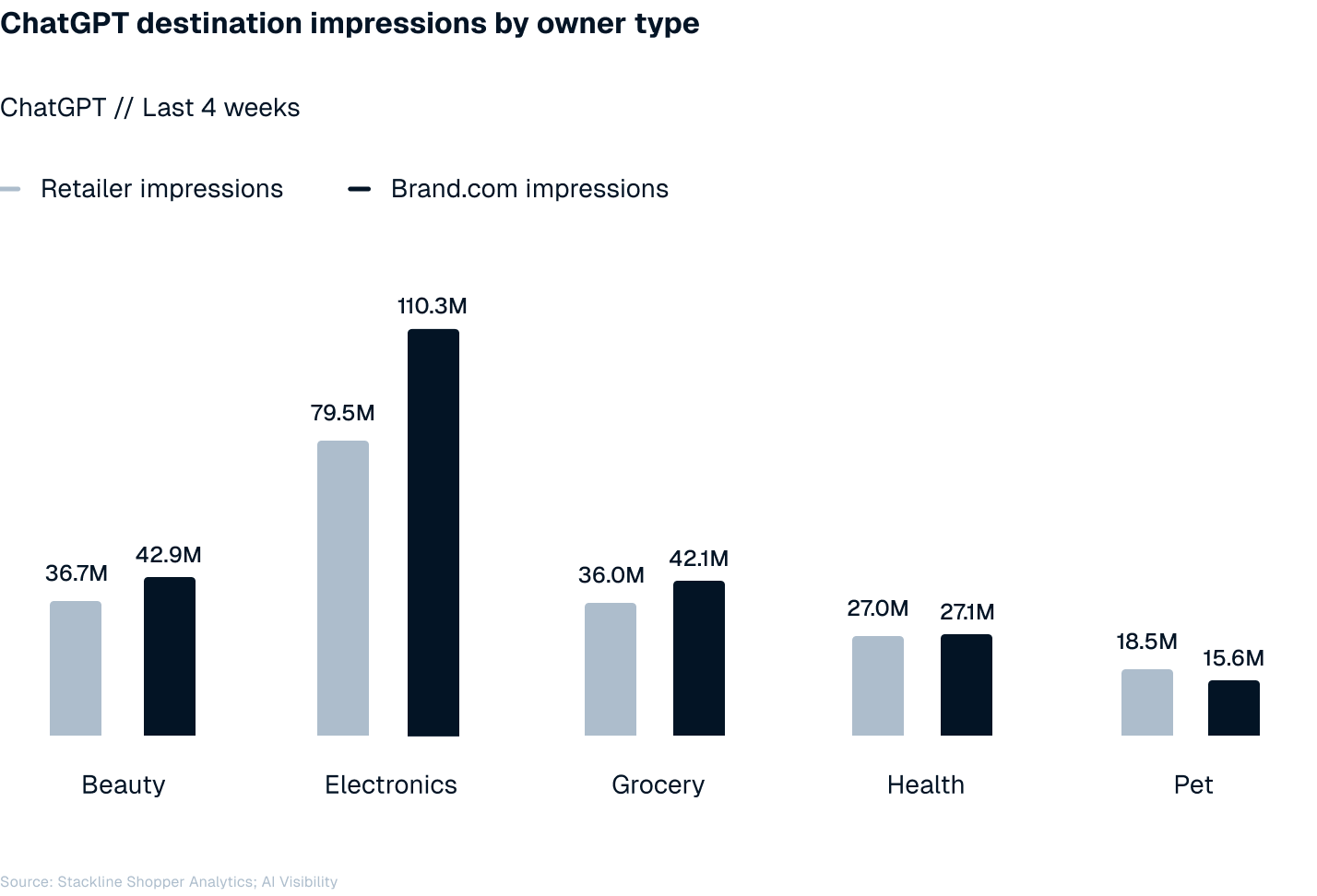
Retailers remain an essential part of AI shopping discovery, but the balance is changing quickly. In the latest four weeks, brand-owned destinations generated more impressions than retailer destinations in Beauty, Electronics, and Grocery, and were nearly even with retailers in Health.
Brand.com is taking a larger role in AI discovery
ChatGPT is increasingly looking directly to brands as it connects shoppers with products, answers questions, and surfaces destinations. That gives brand.com a very different role in the shopper journey.
The open web carries a new kind of value
Much of the conversation around the open and closed web has centered on publishers, crawler access, licensing, and whether AI companies should be able to use content for model training. For consumer brands, the implications extend well beyond that debate.
When an AI system can access a brand's website, the brand has an opportunity to contribute directly to the information shaping a shopper's answer. When it cannot, AI does not simply stop searching. It can turn to retailers, publishers, blogs, social platforms, and other available sources instead.
That distinction matters because a brand can appear in an AI answer without controlling the information behind it. If owned content leaves a question unanswered, provides limited context, or remains inaccessible to AI, other sources can fill the gap.
Brand.com has traditionally helped brands communicate their identity, educate shoppers, support search visibility, and drive direct sales. AI adds another responsibility: brand websites are becoming part of the knowledge layer AI systems use to understand products, categories, and consumer needs. As that knowledge layer becomes more influential, the ability to participate in it directly becomes more valuable.
Being visible is only the first step
Making content accessible does not automatically make it useful. Traditional ecommerce content often focuses on the information required to describe and sell a product: titles, specifications, features, imagery, pricing, and purchase details. AI shopping conversations can demand considerably more context.
Shoppers ask which product works best for a particular need, how two options compare, whether an ingredient or feature matters, which product fits a routine, or what distinguishes one solution from another. A conversation can move from broad category education to a highly specific product recommendation in a matter of seconds. Brands have an opportunity to become the authoritative source for those answers.
That means thinking beyond the traditional product detail page. Buying guides, comparisons, FAQs, category education, use-case content, product explainers, and other resources can give AI richer context about what a brand sells, who its products serve, and why those products matter.
Stackline Pages helps brands turn those knowledge gaps into owned content experiences, making it easier to create and publish pages around the questions shoppers are already asking. Brands can use those pages to expand the authoritative information available to AI while creating useful new destinations for shoppers themselves. The goal is not to flood the web with more content. It is to make the brand's own expertise easier to find, understand, and use.
Measure the answer, then shape it
The growing role of brand-owned destinations creates two priorities. First, brands need visibility into how AI systems already represent them: which questions surface the brand, which products receive recommendations, how performance compares with competitors, and which destinations appear around those answers. Stackline's AI Visibility gives brands that measurement layer, revealing how brands and products appear across AI shopping experiences.
The next opportunity is to act on what that data reveals. When shoppers ask questions the brand does not adequately answer, or when existing content does not clearly communicate the brand's expertise, Pages gives brands a way to create owned content around those opportunities. Together, that creates a more complete AI visibility strategy: understand what AI knows today, identify what is missing, and strengthen the authoritative information available tomorrow.
The brand story has a new audience
Brands once built websites primarily for two audiences: shoppers and search engines. AI introduces a third, and its influence is growing quickly.
That does not make brand websites less important. It makes the information they contain more consequential. As AI increasingly researches products, compares alternatives, and answers questions before a shopper ever reaches a retailer or brand site, every gap in the information it can access creates room for another source to shape the narrative.
Brands cannot control every source AI learns from. But they can make their own expertise easier to find, richer to learn from, and more authoritative when it matters. AI will form an understanding of every brand. The opportunity now is to make brand.com one of the places it learns from first.