
This morning, Amazon gave its AI shopping assistant a promotion. Rufus—the AI shopping chatbot that quietly crossed 300 million users in 2025—is gone in name only. In its place: Alexa for Shopping, a unified experience that merges Rufus’ product expertise and recommendation engine with Alexa’s personalization layer and cross-device memory. Most headlines will frame this as a major pivot. It’s more of a graduation.
The feature is rolling out now across the Amazon Shopping app, website, and Echo Show devices, no Prime membership required.
The operational reality
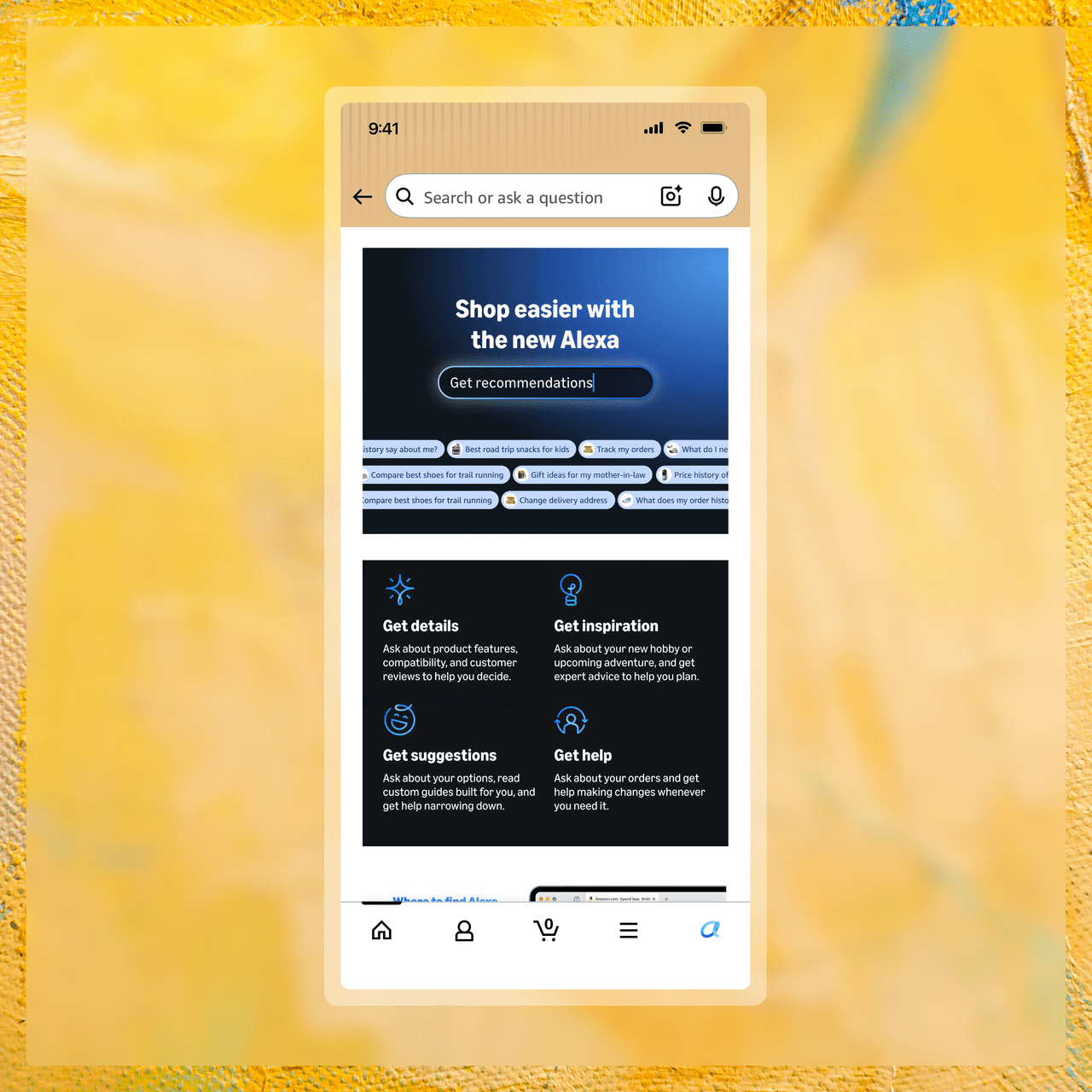
Rufus’ recommendation engine isn’t going anywhere. The core behavior, shoppers asking natural language questions and receiving AI-guided product recommendation, remains intact. What changed is where that experience lives.
Previously, the Rufus chatbot was tucked to the side of the main Amazon experience. Alexa for Shopping is now embedded directly in the primary search bar. Since fall of last year, Stackline has observed a growing number of Amazon A/B tests surfacing Rufus-style questions in the search bar alongside traditional autocomplete. The full deployment confirms what those tests were pointing at: this is how Amazon now expects its hundreds of millions of shoppers to shop. AI-assisted shopping is no longer an optional feature for the curious, it’s the default path.
Amazon also closed the loop across devices. A shopper can brainstorm ideas with Alexa on their Echo, then pick up the same conversation in the app the next day, without starting over. The shopping “mission” follows the consumer across sessions and surfaces. That continuity is what separates a genuinely useful assistant from a novelty.
What Alexa for Shopping does
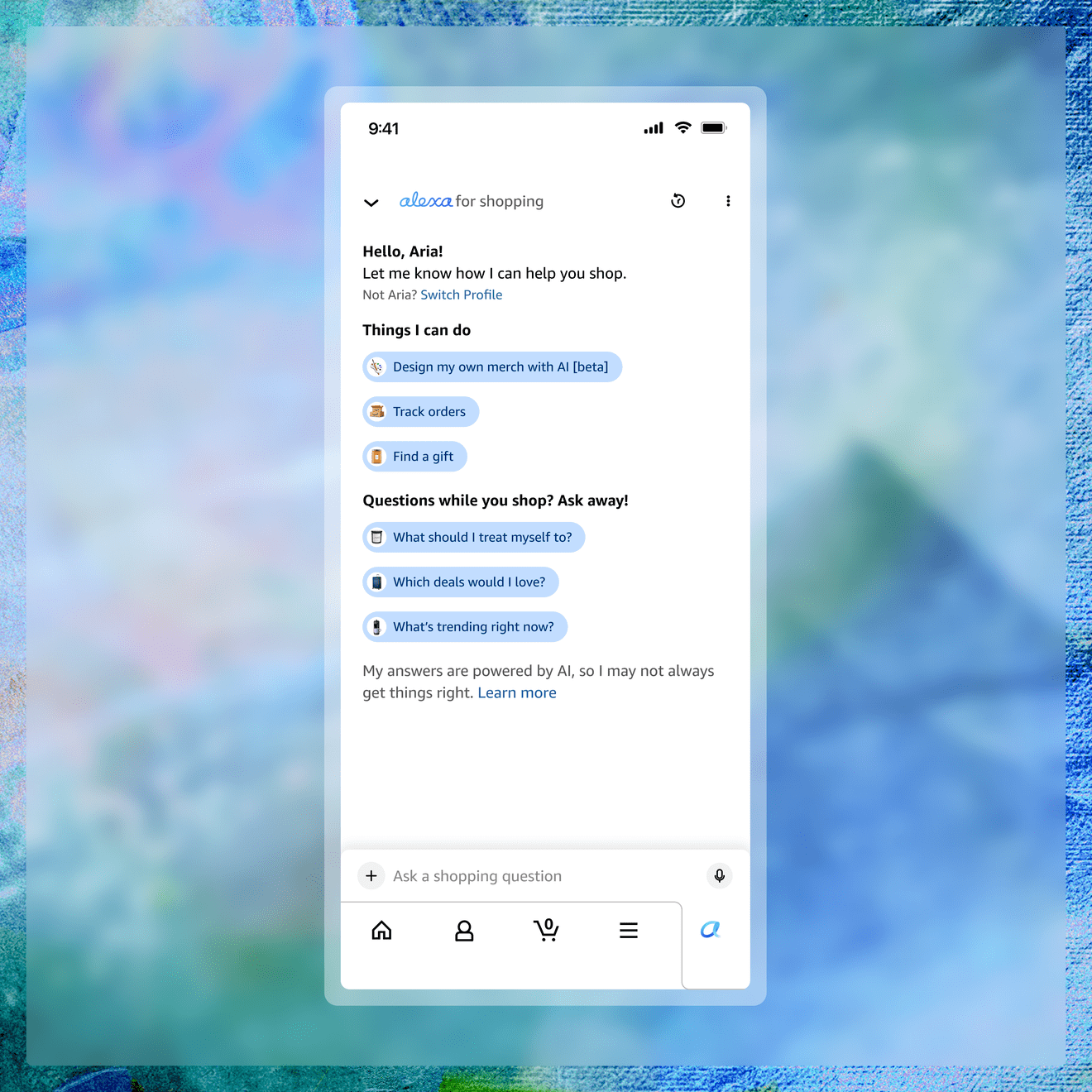
Amazon’s press release details a suite of new and upgraded capabilities that illustrate how deeply this assistant is being woven into the shopping experience.
Questions in the main search bar. Shoppers can now ask questions directly in Amazon’s primary search bar, not just the dedicated chat window. The search experience detects when a user is asking a question versus querying a keyword and routes accordingly. A search for “Breville Barista Express vs Pro” triggers a comparison, “Where is my order?” pulls order history.
Persistent cross-device memory. Conversations and preferences flow in both directions between Amazon and Alexa-enabled devices. If a shopper brainstorms a homemade volcano for a school science fair on their Echo, they can open the Amazon app the next day, ask Alexa for Shopping for supplies for “the project we talked about,” and receive a tailored list, ready to add to cart.
Personalized shopping guides. For complex, higher-consideration purchases, Alexa for Shopping can generate dynamic category guides based on what it knows about the shopper, surfacing the right specs, price ranges, and product types rather than a generic results page.
Product comparisons from search results. Shoppers can select multiple products directly from search results and get a side-by-side comparison of features, pricing, and reviews—without navigating to individual product pages.
AI overviews in search and on PDPs. AI-generated summaries now appear at the top of search results and on product detail pages, giving shoppers a quick category orientation before they start browsing. The feature is already live for millions of U.S. customers and rolling out broadly.
Price history and deal automation. Shoppers can view up to a full year of price history on hundreds of millions of products. They can also set a target price—and when that price is hit, Alexa proactively notifies them across devices. A shopper can set a laptop price alert in the app and have their Echo announce when the deal lands, then complete the purchase by voice on the spot.
Agentic reordering and cart management. Alexa for Shopping can automate routine repurchases, manage cart building, and execute deal-finding based on the shopper’s history and stated preferences.
Why Amazon moved now
The data made the decision easy. Amazon reports over 300 million customers used Rufus in 2025, with monthly active users up more than 115% year-over-year. Stackline data showed shoppers were submitting over 87 million shopping questions to Rufus weekly by the end of Q1 2026, just behind ChatGPT, which was processing approximately 92 million weekly shopping queries. Graduating Rufus into the main product is Amazon acting on its own usage curves.
There’s a competitive urgency to the move as well. ChatGPT has launched shopping features. Google’s Gemini is enabling in-chat checkout with major retailers. Perplexity built an agentic purchasing browser before Amazon blocked it. Amazon’s position has been consistent: the best shopping agent for Amazon customers will be built by Amazon, on Amazon, using Amazon’s data. Alexa for Shopping is that bet made fully visible.
What brands need to think about
For brand teams, the mechanics of the rebrand matter less than what it confirms: question-based shopping is becoming a primary path to discovery on Amazon. That shift has implications for content, assortment, and measurement.
The measurement infrastructure most brands rely on today was built around keyword behavior. That discipline needs to extend — quickly — to questions, at the same level of granularity. The right questions to answer: Which shopping questions are driving volume in a given category? Which are accelerating? Where do specific products appear (or not appear) in the AI’s answers? Category-level summaries aren’t sufficient. SKU-level question visibility is the new share of search. And just as share of search became a leading indicator of market share, share of recommendation will too.
Over the past two years, Stackline has been tracking shopping question volume across major AI answer engines, with deep focus on how Rufus has been evolving. For the brands already using AI Visibility, that data has already started reshaping how teams think about content strategy, assortment, and competitive positioning. The Alexa for Shopping transition is less about rebuilding a measurement framework from scratch, and more about updating the labels on charts that are already informing decisions.
What to watch
Traditional keyword search isn’t going anywhere. The retail media infrastructure built around it is too large and too profitable to unwind quickly. But as Alexa for Shopping gets embedded deeper into the shopping surface—search bar, product pages, Echo devices, Echo Show—more purchase journeys will begin with a question rather than a keyword. The pace of that shift is the variable worth tracking closely.
When keyword search moved from a fringe behavior on the internet to one of the primary discovery paths in retail, most brands were caught flat-footed. The window to build a meaningful position closed faster than anyone expected. Alexa for Shopping is the same inflection point, arriving faster. The brands that move now won't be explaining why they waited.