
The brands with the strongest organic search presence on Amazon share a common advantage: they treat keyword strategy as a measurable, data-driven discipline, tracking which keywords are driving traffic and which high-volume terms they haven't fully captured yet. Most brands know their organic coverage is incomplete. What's been missing is the product-level precision to know where to act first.
Beacon's new product-level keyword data closes that gap.
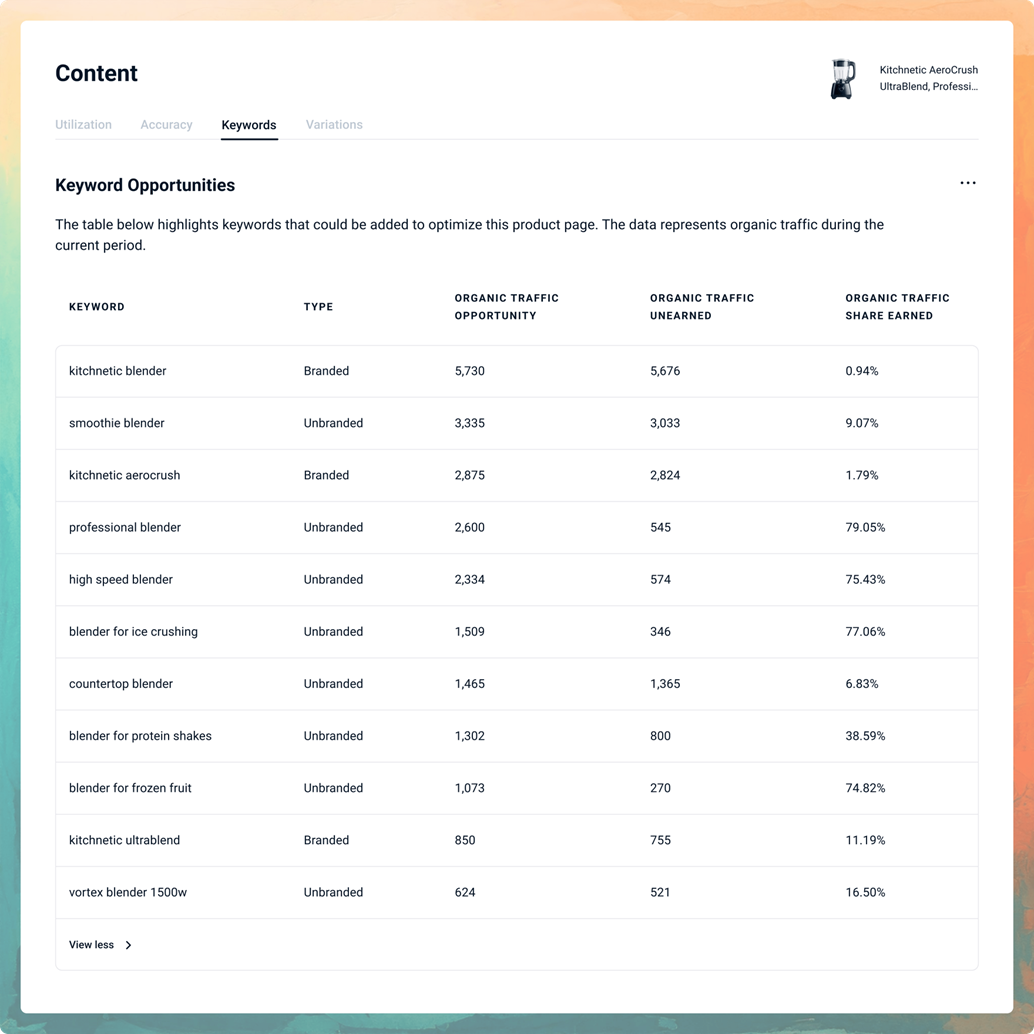
What's New
Beacon now surfaces keyword opportunity data at the individual product level, giving brands a precise, ranked view of where organic traffic is being left uncaptured. For each product, brands can see:
- Organic Traffic Opportunity: the total search volume available for a given keyword
- Organic Traffic Unearned: the portion of that traffic the product isn't currently capturing
- Organic Traffic Share Earned: the percentage of keyword traffic the product has already won
The result is a clear, prioritized ranking of the highest-value keywords a product could realistically target, ranked by the size of the gap, not just raw search volume.
Why This Matters
Most brands know their organic search coverage has gaps. What's been missing is the precision to know which keywords, how much traffic, and where to start.
Consider a brand in the snack or protein category. A product optimized for branded search might be earning strong traffic on its core terms but sitting at near-zero share on high-volume unbranded queries — terms like broad category terms, use-case searches, or seasonal gift queries — that drive tens of thousands of monthly visits. Those gaps rarely surface in standard reporting. They require the kind of keyword-level, product-level visibility that Beacon now provides.
The same dynamic plays out across categories. A personal care brand might discover its flagship moisturizer has strong share on ingredient-led searches but no presence on skin type or concern-based queries driving significantly more total traffic. A home goods brand might find that seasonal gifting keywords represent a massive, largely unearned traffic opportunity sitting right next to their core assortment.
Three Ways Brands Are Using This Data
1. Prioritizing Content and Copy Updates
Product detail pages are the primary lever for organic keyword performance. When Beacon surfaces a keyword with high organic traffic opportunity and near-zero share earned, it's a direct signal that the product's content — title, bullets, description, backend terms — isn't capturing that demand. Brands can use this data to prioritize which PDPs to optimize first, focusing effort on the keywords with the highest unearned traffic rather than optimizing broadly and hoping for results.
2. Informing Advertising Strategy
Organic and paid search aren't separate strategies, they're two sides of the same consumer intent signal. When a product has low organic share on a high-volume keyword, paid coverage on that term becomes more valuable. Beacon's keyword data gives media teams a principled framework for identifying where to run sponsored product and keyword-targeted campaigns while organic share builds. The gap between opportunity and earned share is, in effect, a paid coverage map.
3. Benchmarking Across the Portfolio
At the portfolio level, the keyword opportunity data reveals which products have strong organic footing and which have the most room to grow relative to the traffic available in their subcategory. This is especially valuable for brands managing large assortments across multiple categories. It surfaces the products most in need of investment and the categories where organic infrastructure is strongest.
Organic Search Has Always Driven Revenue. Now It's Measurable.
Keyword opportunity doesn't wait. The brands that identify it earliest, and act with precision, are the ones that compound their organic advantages over time. Beacon is how brands get there first.