
Prime Day 2026 is June 23–26. For most brands, the prep work is already underway. Deals submitted, budgets allocated, creative in flight. But consumer behavior data collected just days after Amazon announced the event dates tells a more nuanced story about who these shoppers are, what they want, and when brands need to show up to earn their business.
What the data reveals is a shopper that is already in motion — browsing, comparing, and building carts before the event even starts. Here is what that means for brands.
Most shoppers haven't committed, and won't until they see a deal
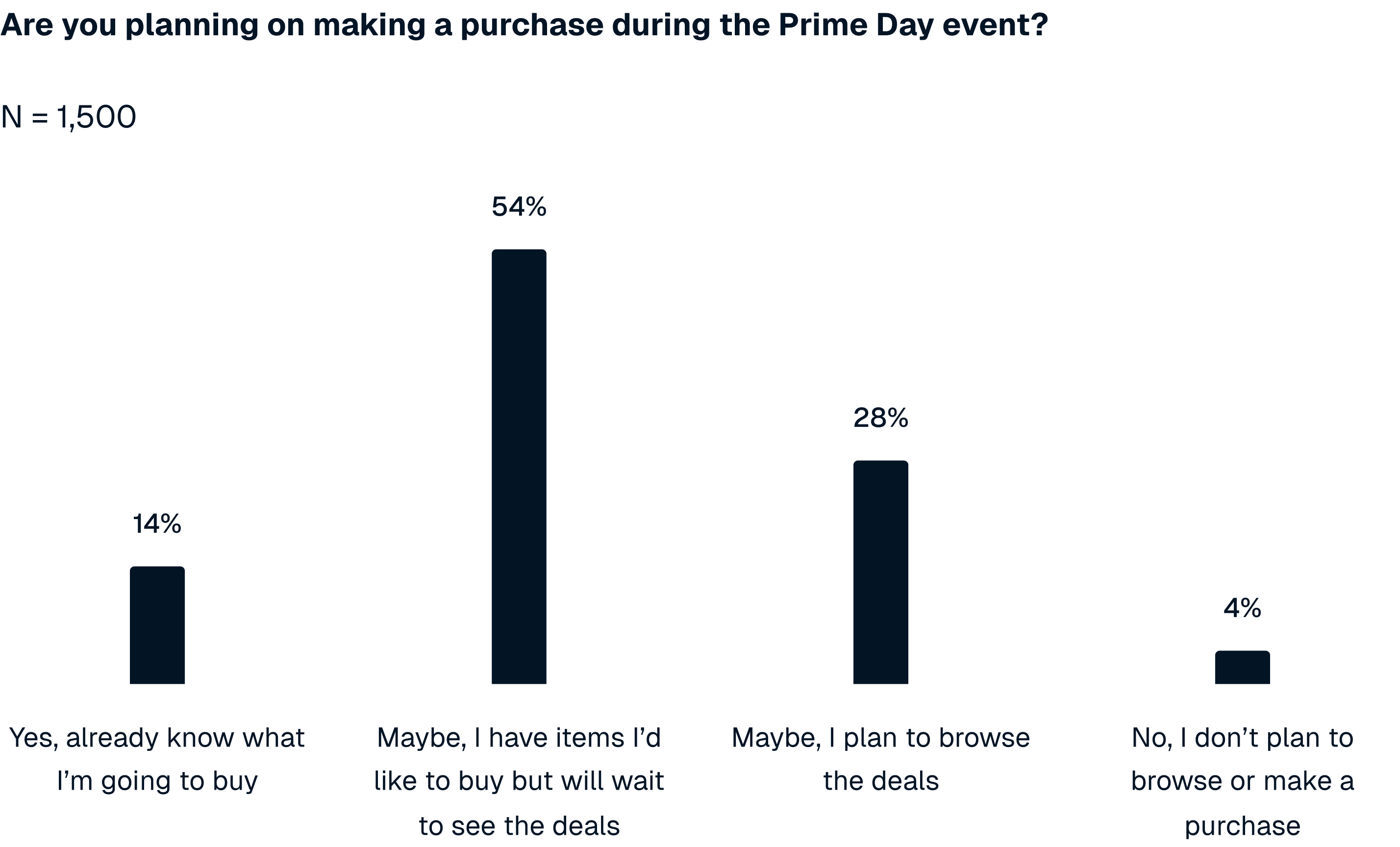
96% of consumers plan to browse or buy during Prime Day. Only 14% already know what they're buying.
That gap is an opportunity. The overwhelming majority of Prime Day shoppers are still persuadable, and a well-placed promotional offer is the conversion lever.
The discount bar is also lower than many brands assume. Two-thirds of shoppers are satisfied with 35% off or less, and the 20–25% range captures the largest share of intent, meaning brands can compete effectively without sacrificing margin.
For teams still finalizing their promotional strategy, prioritizing deal badging on top SKUs and ensuring promotions are live and visible before the event starts are the two highest-impact moves heading into the week.
The pre-shop window is open, and it's almost over
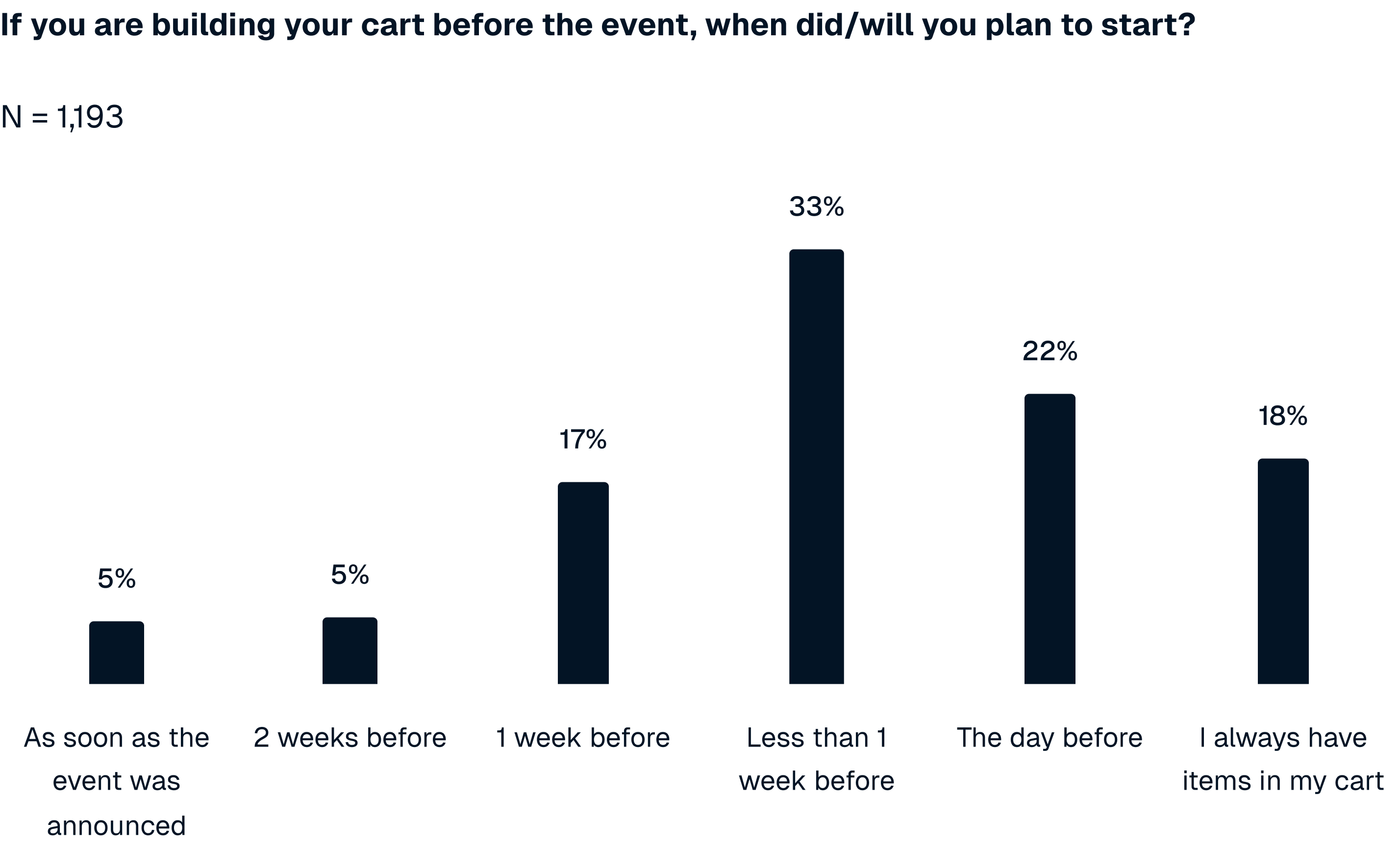
83% of shoppers plan to build or are considering building their cart before the event starts. But when they browse matters as much as whether they browse.

55% of cart-builders will do so in the week leading up to Prime Day. The final stretch before June 23 is the peak consideration period. Brands that show up with visibility and deals during those seven days are well-positioned to earn a spot in shoppers' carts before the event starts.
Pre-shopping behavior has become a consistent feature of major Amazon events. Brands that arrive at the event with optimized product pages and a clear advertising strategy are best positioned to capture that early intent. Stackline's PDP guide for a new era of shopping covers how to build pages that perform in both traditional search and AI-driven discovery ahead of Prime Day. For brands looking to sharpen their advertising approach, AMC 101 for Prime Day is a practical starting point.
Amazon’s platform is where deals get discovered
When shoppers want to find Prime Day deals, 71% go directly to Amazon's homepage or app. That's nearly three times the reach of any off-platform channel. Amazon email and push notifications come in second at 28%, followed by social media influencers at 26%.
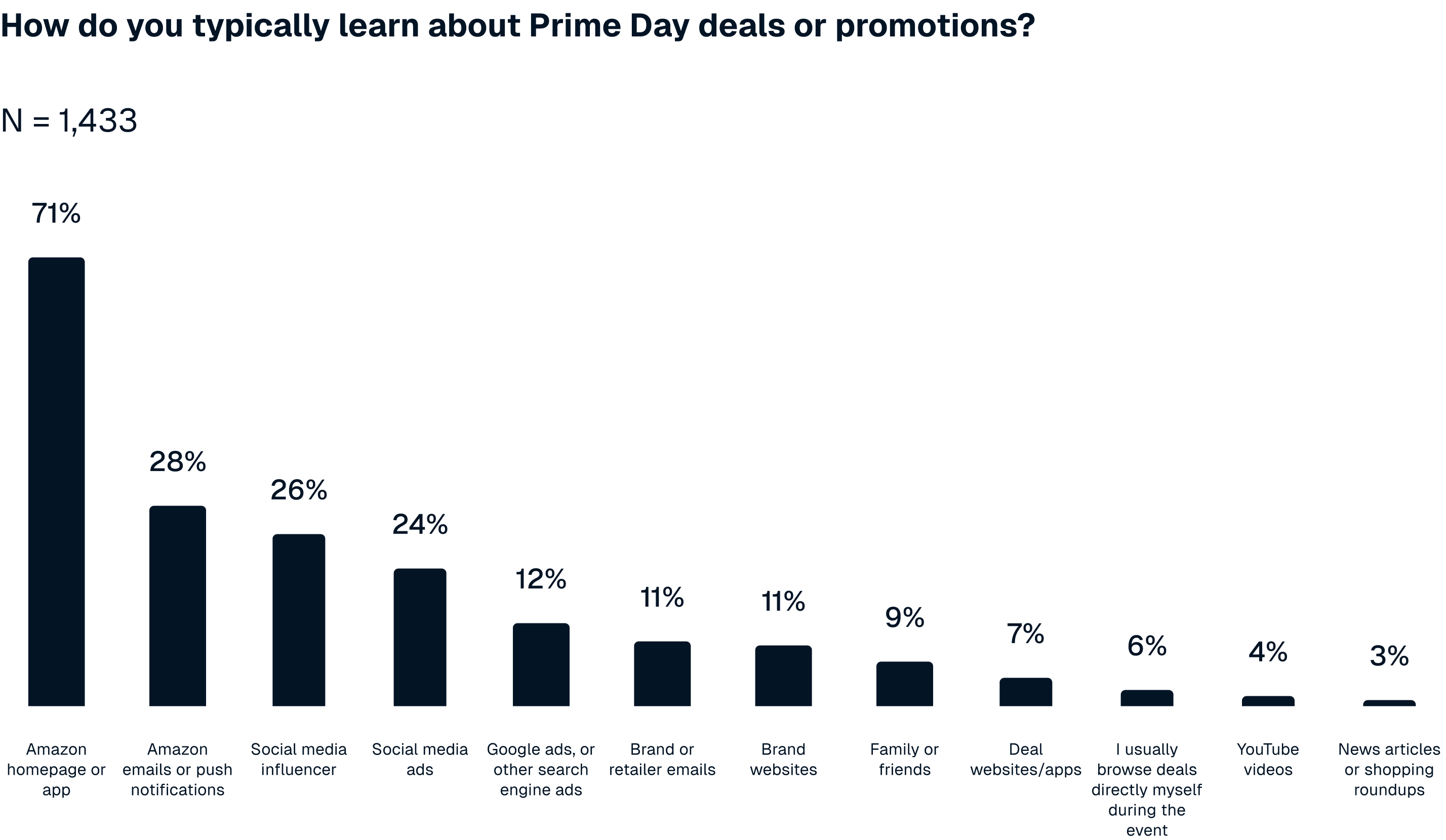
The implication is straightforward: on-platform visibility is the highest-leverage investment brands can make in the days leading into Prime Day. Sponsored placements, deals badging, and optimized product detail pages determine whether a brand is visible during the browse phase when most purchase decisions take shape.
Social media plays a secondary but meaningful role, particularly on Instagram and TikTok. In the days leading up to June 23, countdown content, deal preview posts, and influencer seeding can drive early add-to-carts and build awareness before shoppers land on Amazon. Brands that coordinate their social calendar with their on-platform activation are set up to convert the browse phase into sales.
Shoppers are stocking up, not gifting
40% of Prime Day shoppers are shopping primarily to stock up on basics. General browsing with no specific occasion comes in second at 33%, followed by buying higher-priced items on sale at 27%.

Apparel leads department interest at 51%, followed by household supplies, tools, and home improvement at 41%, beauty at 39%, and electronics at 38%. Grocery, which spiked last year amid tariff and inflation concerns, dropped 11 points year over year.

The category mix signals that replenishment and value-driven purchasing are the primary motivations this summer. Brands in consumables, home, and apparel have a direct line to the most active shopper segments. Leading with messaging that emphasizes value, everyday utility, and stocking up, rather than gifting or seasonal occasions, is more likely to resonate with where shopper intent sits this Prime Day. Bundling and multi-unit offers are also worth considering: when shoppers are already in a restocking mindset, those formats tend to outperform single-unit discounts.
Consumer confidence is meaningfully better than last year
30% of shoppers plan to spend less than last year, compared to 37% at Prime Day '25. The share planning to spend the same or more increased correspondingly.

This is a tailwind for the event. The spending anxiety that characterized last summer's shopping environment has eased, and brands have more room to win than the prior year's data would have suggested. That improved sentiment is also an opening to promote higher-AOV products with confidence. Shoppers who are less budget-constrained are more likely to trade up when the right offer is in front of them.
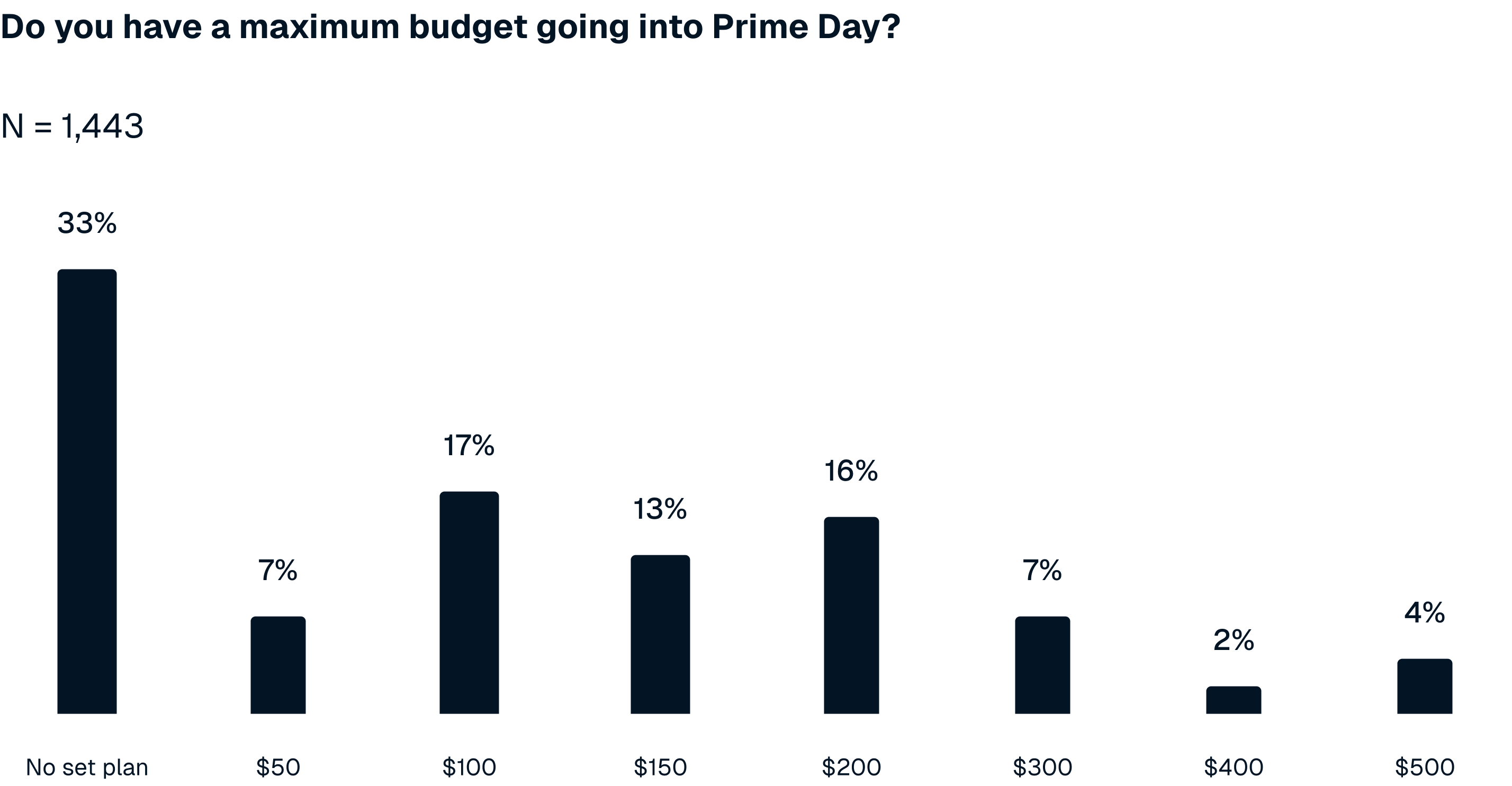
That said, the shopper base is split: 33% are entering Prime Day with no spending ceiling at all, while 38% are budget-capped at $150 or under. Brands that can speak to both ends of that spectrum, with clear value messaging for price-sensitive shoppers and premium positioning for uncapped ones, are best placed to maximize the event.
AI is entering the shopping funnel and product content is the battleground
58% of Prime Day shoppers plan to use or are considering using AI during their shopping journey. Price comparison is the dominant use case at 65%, followed by checking price history at 46% and summarizing reviews at 25%.

As AI tools take on more of the product research and comparison work, the quality and accuracy of product content becomes a direct growth lever. Structured, descriptive, and well-optimized PDPs perform better in both traditional search and AI-powered discovery. Reviews are a particularly high-value input. While 25% of AI shoppers are explicitly asking AI to summarize reviews, AI agents rely on review volume and sentiment as a primary signal when generating recommendations. Brands with strong review coverage heading into Prime Day have a built-in structural advantage.
Amazon's own AI tool, Alexa for Shopping (formerly Rufus), has already reached meaningful adoption. 50% of shoppers have tried it, and its usage intent ahead of this Prime Day has grown meaningfully year over year.
The most common Alexa behavior is asking questions directly in the search bar, which means shoppers are interacting with it the same way they use ChatGPT or other AI tools, in natural language. PDP copy and A+ content structured to directly answer the questions shoppers are likely to ask will perform better in this environment than content written purely for keyword matching.
Two-thirds of shoppers will check other retailers
Only 34% of Prime Day shoppers say they'll look exclusively at Amazon. The remaining two-thirds plan to compare deals at other retailers, with Walmart (54%) and Target (42%) the most common alternatives.

For brands managing presence across multiple retail channels, this cross-shopping behavior is a meaningful opportunity. Shoppers are actively comparing deals across the retail landscape, and the brands best positioned to capture that demand are those with consistent pricing, strong in-stock status, and content parity across retailers. A shopper who discovers a product on Amazon but finds a better deal or a more complete product page at Walmart or Target will convert there instead, and that's a win regardless of where it happens.
The data points to a clear picture heading into June 23.
Shoppers are aware, engaged, and ready to buy. But deals, visibility, and content quality will determine which brands earn their business. The window to activate is the week ahead. Brands that show up on-platform with strong promotions, optimized pages, and a coordinated cross-channel presence are well-positioned to make this their best Prime Day yet.
Stackline's Consumer Pulse surveyed 1,500 US shoppers in June 2026 using its verified purchaser research platform, which draws on a proprietary audience of over one million US consumers with direct retail purchase data access.