
Most product pages on Amazon were built for a shopping experience that has fundamentally changed. The old playbook was straightforward: optimize for keywords, win on rankings, drive clicks, convert. Pages were engineered for an algorithm that rewarded the right terms in the right places. Keywords still matter. They're just the starting point now.
Amazon's recent rebranding of Rufus to Alexa for Shopping wasn't cosmetic. It signals a fundamental shift in how shoppers discover and buy, away from keyword matching and toward contextual relevance. For brands, that means the PDP now has to perform in two environments simultaneously: traditional search and AI-driven discovery. Most pages were only built for one.
The brands that arrive at Prime Day with pages built for both environments will have a structural advantage. Here's how to build one.
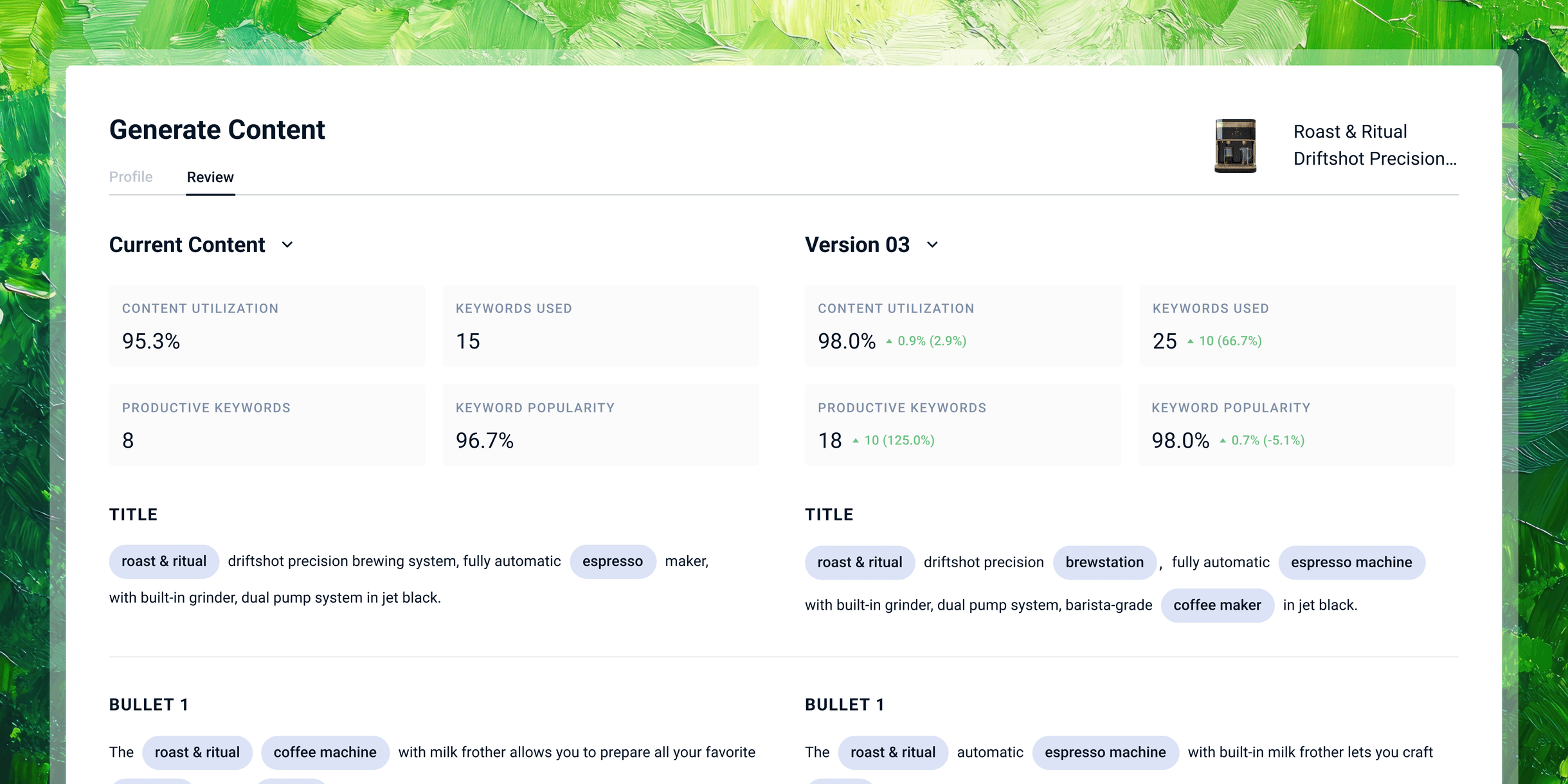
[01] Write for questions, not just keywords
Alexa doesn't score pages on keyword frequency. It evaluates whether a page can answer a specific shopper question better than the alternatives, weighing titles, bullet points, A+ modules, Q&A, and review language against what a shopper is asking. A page built purely around keyword density may still rank, but being recommended is where the real growth opportunity is. During Prime Day, when Alexa is fielding millions of high-intent queries, the brands that earn those recommendations will pull ahead.
Start with the top 20% of SKUs by Prime Day revenue potential and ask a simple question for each: does this page answer two questions: "what is this product" and "is this the right product for me?"
- Bullets should lead with use case, not features. Who is this product for, when do they use it, and why does it fit their life better than the alternative? A bullet that opens with "ideal for runners training for their first marathon" converts differently than one that opens with "lightweight mesh upper."
- Q&A sections should address real purchase objections. Most Q&A content answers basic product questions. The highest-converting pages use Q&A to resolve the doubts that stop shoppers from adding to cart: compatibility concerns, sizing uncertainty, ingredient questions.
- A+ content should speak to context, not just brand. The strongest modules don't just showcase the brand, they compare, clarify, and guide, walking a shopper through why this product fits their life better than the alternative. Lifestyle imagery and in-context visuals belong here, where Amazon gives brands the creative freedom to show the product in use.
Optimizing for Alexa and for traditional search aren't mutually exclusive. Content written with specificity and shopper intent tends to perform better in keyword rankings too. The two disciplines reinforce each other, and brands that approach them together will see compounding returns across both environments. Learn more about the approach leading brands are taking to across both SEO and AEO.
[02] Understand where you show up — and where you don't
Most teams have solid visibility into traditional search rankings, ad performance, and conversion rates. Far fewer know whether Alexa is recommending their products, which queries are driving those recommendations, and where the biggest opportunities lie. Brands with that visibility will have a meaningful edge when Prime Day traffic peaks.
The questions every brand should be asking right now:
- Am I visible where intent is highest? Understanding question volume by category reveals where the highest-intent discovery moments are happening and whether a brand is earning visibility in those moments or ceding them to competitors.
- Where are competitors showing up instead of my brand? Competitive impression share data reveals not only whether a brand is being recommended, but how often and in response to which queries.
- Where should I focus first? Not every query gap is equal. Identifying the high-intent questions where products are relevant but not currently recommended, and quantifying the projected sales impact of each gap, helps teams prioritize the changes that will move the needle most.
AI Visibility is the industry's only dataset that tracks millions of real shopper questions every day, measuring impression share and product recommendations across the full competitive landscape on Alexa for Shopping, ChatGPT, and other agentic commerce platforms. It gives brands a clear view into where they're winning and where there's room to grow before the event starts.
There's no better time to understand where your brand stands in AI-driven discovery than right now, before Prime Day concentrates shopper attention at scale. The data exists, and the opportunity is there for brands willing to go find it.
[03] Close the objection on the page
Prime Day concentrates purchase decisions. Shoppers arrive with high intent and a clear sense of what they're looking for, and the pages that make it easy to say yes are the ones that earn the sale.
Objection resolution can't live below the fold. The most common reasons shoppers don't convert - uncertainty about fit, compatibility, quality, or value relative to alternatives - need to be addressed in the first scroll.
- Make the decision easy. Prime Day shoppers aren't just comparing products. They're using AI to verify that a deal is actually a deal before committing. Stackline's BFCM research found that price comparison and price history validation were the top AI use cases during the event. A page that makes value immediately obvious, through clear promotional framing, transparent pricing, and strong social proof, is the one that converts.
- Every image is a selling opportunity. While the hero image must show the product on a white background, secondary images are where brands can show scale, demonstrate use, highlight key features, and address the visual questions shoppers have before committing. A strong secondary image set reduces uncertainty faster than any bullet point.
- Reviews are content too. Reviews aren't just social proof for shoppers. Alexa actively reads them when formulating recommendations. Recency, volume, and sentiment all influence how confidently Alexa surfaces a product in response to a query. Strong review coverage is a visibility advantage before it's ever a conversion one.
- Leave no reason to hesitate. Premium A+ content, comparison modules, use-case imagery, compatibility guides, exist to resolve the final objection standing between a shopper and the cart. The pages that answer every question a shopper might have are the ones that close.
Stackline's Content tools give brands a clear view of where their product pages have the most room to improve, surfacing content gaps so teams can prioritize the highest-impact changes before Prime Day. Stackline's Reviews solution automates the collection and publication of verified reviews across every major retailer, building the social proof layer that both shoppers and Alexa rely on. Together they cover the full conversion surface, from the first impression to the final click.
The best page you have today can be better tomorrow
PDP optimization isn't a pre-event sprint or a one-time project. It's an ongoing discipline that compounds over time, and Prime Day is one of the clearest opportunities to see the results of that work at scale. The brands that treat it that way, updating content as Alexa surfaces new questions, refreshing reviews as sentiment shifts, sharpening imagery as shopper behavior evolves, show up to every tentpole event with pages that are genuinely ready.
Start with an honest audit of your highest-potential Prime Day SKUs. Run each page against the questions-first, objection-resolving standard above. Prioritize changes by impact. There's still time to make meaningful improvements before the event, and the habits built in doing so will pay dividends long after it's over.