
Amazon is cutting product title limits from 200 characters to 75 and introducing a new searchable field called item highlights. Any title not updated by July 27 will be rewritten by Amazon's AI. Beacon and Advisor now give brands the tools to get ahead of that deadline on their own terms.
What's new
Beacon's Content Generation module has been updated to produce Amazon-compliant titles and item highlights — the new 125-character, searchable field Amazon is introducing alongside the title change. Brands can now draft, review, and optimize both fields directly within the platform, informed by Beacon's keyword and AI visibility data. Brands can also generate Amazon-compliant titles and item highlights via prompt through Advisor, directly within the platform.
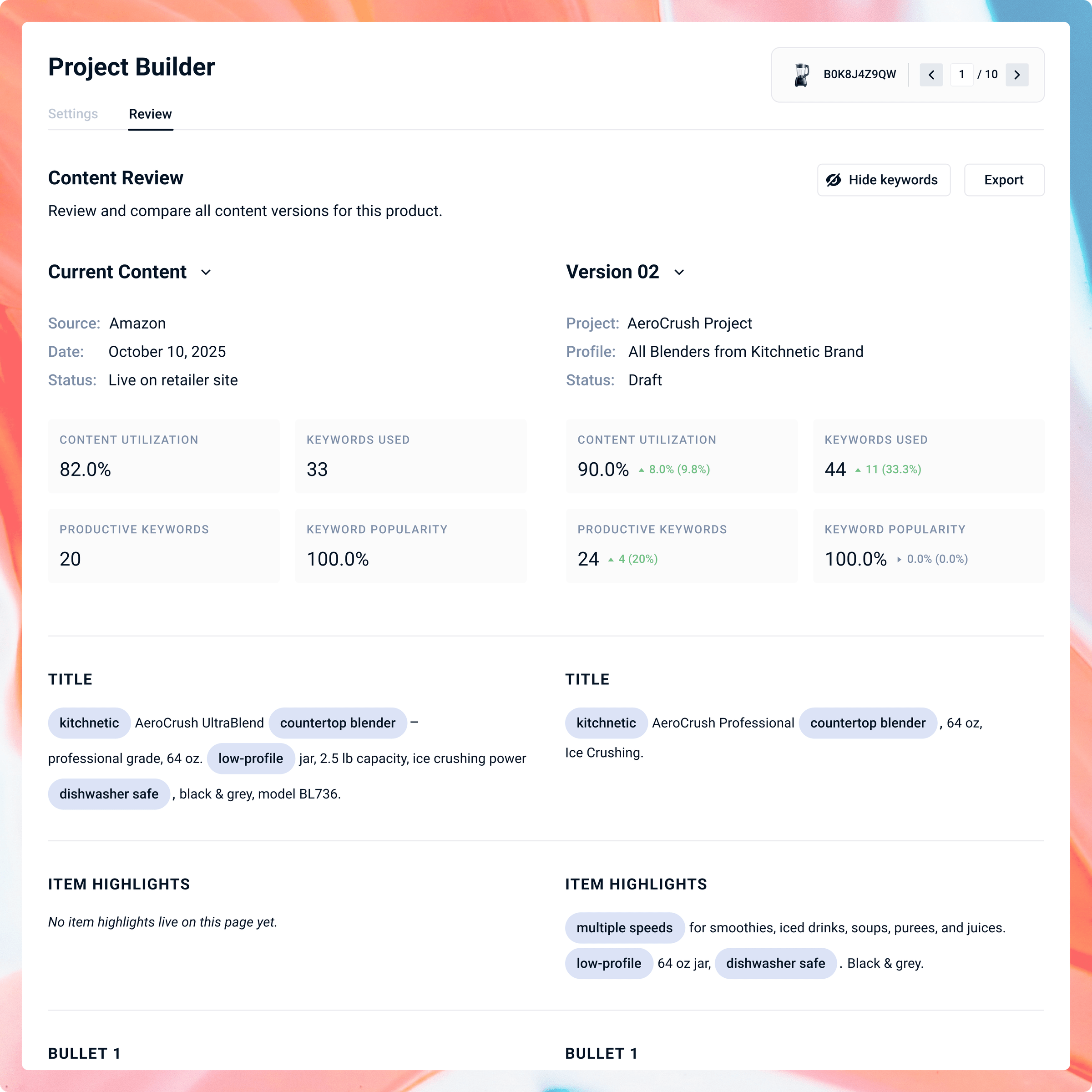
Content utilization within Beacon will reflect the new fields once Amazon begins publishing them.
Why this matters
Amazon's new requirements don't just change the character limit, they change how keyword strategy works across the entire listing. For years, the prevailing approach was keyword-heavy titles built for algorithms. This change accelerates a shift toward clearer, more concise content that works for both search systems and shoppers. The brands that treat this as an opportunity to rethink their content architecture, not just trim characters, will protect organic rank and unlock indexing potential competitors may miss.
A new keyword architecture: titles + highlights as one surface
The 75-character title and 125-character item highlights field aren't separate decisions, they're a single, 200-character search surface that requires a clear hierarchy.
- Titles should lead with brand, product type, and the highest-value search terms. Every character must earn its place. The limit exists because most Amazon shopping now happens on mobile — titles need to land in a glance.
- Item highlights are the place for secondary keywords, materials, use cases, and differentiators. Short, benefit-driven phrases perform better than full sentences. Because this field is searchable, it functions as indexing opportunity, not just display copy.
One rule governs both: no duplication. Amazon explicitly instructs against repeating title content in highlights, as duplicated characters waste indexing potential. The title should establish identity; highlights should extend reach.
One unlock worth noting: item highlights only display when the title is under 75 characters. Brands that shorten titles early effectively gain access to an extra searchable field ahead of competitors who wait.
What to do before July 27
Audit the full catalog. Identify every ASIN with a title over 75 characters and prioritize by revenue contribution, traffic, and strategic importance. This becomes the execution roadmap for the weeks ahead.
Draft new titles and item highlights now. Writing 75-character titles and 125-character highlights for priority ASINs takes longer than submitting them. Getting drafts done now means brands are ready to submit well ahead of the deadline.
Use Amazon's AI recommendations as input, not output. The "View enhancements" tool in Amazon's Catalog shows what Amazon would write for a given listing. Use it as a baseline to improve on, not a template to accept.
Submit before Amazon does it. Proactive submission gives new titles time to re-index ahead of the deadline and keeps the timing in brand hands. Monitor the Review Listings Changes dashboard closely, the 14-day approval window for any AI-generated rewrites expires whether or not anyone checks it.
Downstream impacts
Title changes don't stay on the detail page. They ripple across the entire retail ecosystem.
Advertising. Sponsored Products relevancy is influenced by title content. Brands should audit campaigns after titles change and monitor for CTR and relevancy shifts, refreshing any ad creative or copy that references old title language.
Measurement. Establishing benchmarks for organic rank, share of voice, traffic, and conversion before making changes ensures post-change performance can be evaluated against a real baseline, not a guess.
Stackline segments. Segments built on keywords found in titles dynamically refresh each week. As titles change under the new requirements, keyword-based segments will shift, and products can move in or out as title content updates. Brands that want segment membership to stay fixed should build segments based on ASINs rather than keywords. Stackline will take a snapshot of existing segments ahead of the July 27 deadline so the prior state can be referenced and compared going forward.
The deadline is July 27
Brands have a couple weeks to submit their own titles before Amazon begins rewriting them. Beacon and Advisor are both ready to support that work today.