
Every week, nearly 100 million shopping questions flow through ChatGPT in the United States alone. Consumers receive answers about which products to buy, which brands to trust, and which options deliver the best value. The only question for brands: are they part of that conversation?
While still early stages, ChatGPT ads have the ability to change those conversations entirely. Launched in beta in February 2026 and currently reaching users on ChatGPT's Free and Go tiers, which represent the vast majority of its user base, the platform gives brands a direct way to show up inside the conversations already driving purchase decisions. When a shopper asks a shopping-intent question, sponsored product cards appear beneath ChatGPT's response.
Why now is the right time to test
The scale of ChatGPT as a shopping channel is still growing, although it does vary by category. For example, Stackline data from the Headphones category shows that over the last 52 weeks, ChatGPT generated 19.40 million shopping questions, already surpassing Amazon Alexa (formerly Rufus) at 10.68 million. These volumes don't yet approach the scale of traditional or retail search, but ChatGPT represents the fastest-growing surface area in commerce, and the competitive field is still wide open.
.png)
10 steps to test and learn on ChatGPT
Getting started on ChatGPT advertising doesn't require starting from scratch. Stackline has built a connected set of capabilities, from AI intelligence through campaign management, landing pages, and measurement, that gives brands everything they need to test, learn, and scale responsibly. Here's how it works end to end.
[01] AI Visibility: Know your market before you spend
Before launching a single ad, brands need to understand where they stand in the AI shopping conversation. Stackline's AI Visibility platform measures millions of real shopping questions across ChatGPT, Amazon Alexa (Rufus), and other agentic commerce environments, capturing actual volume, impression share, and competitive dynamics behind every query. Brands can identify gaps in the questions they don't rank for, segment topics by intent and category, and pinpoint exactly where early advertising investment will drive the greatest impact on share of recommendation.
.png)
[02] Question targeting: Precision at the query level
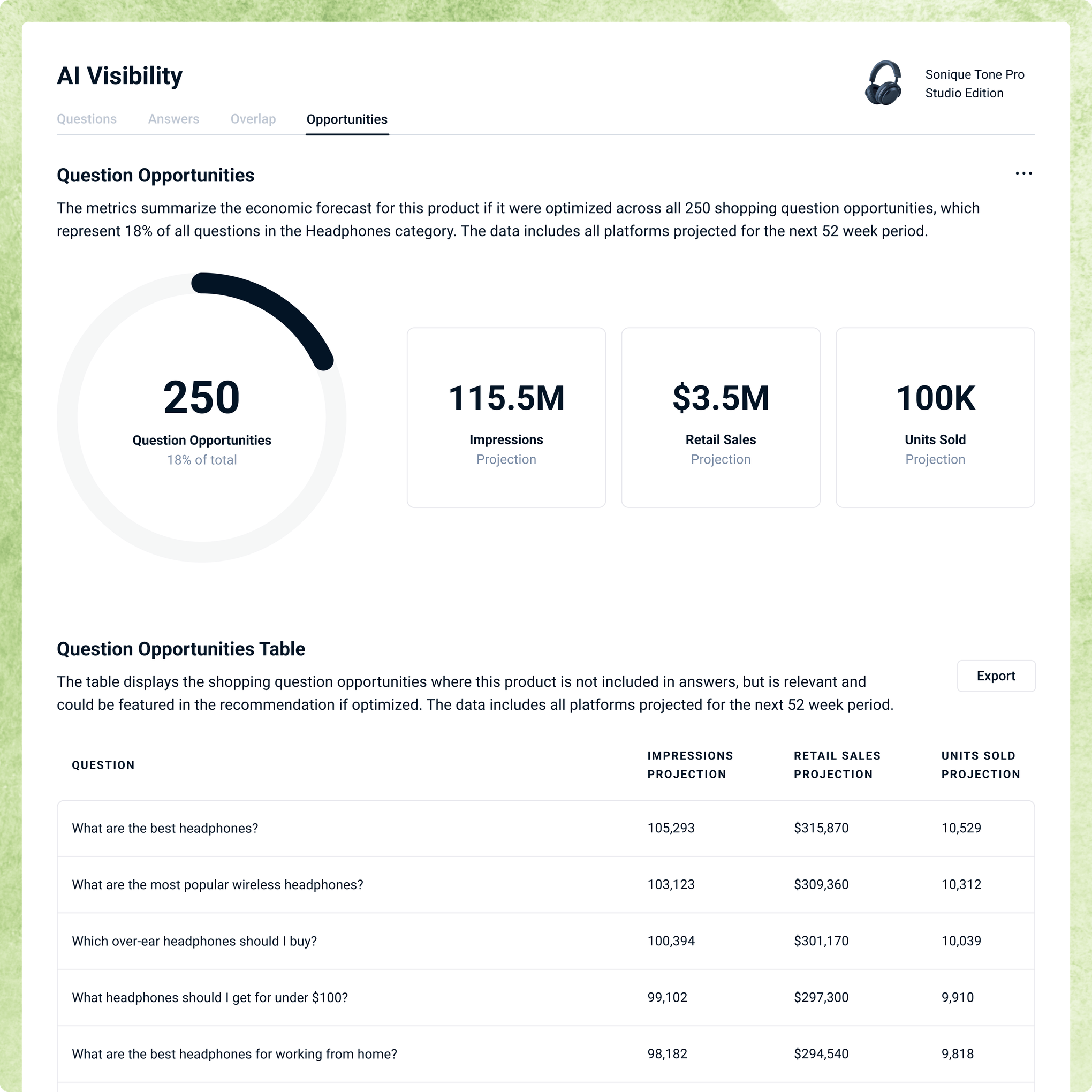
ChatGPT advertising introduces a fundamentally new targeting paradigm. Rather than targeting audiences or specific keywords, brands target segments of intent. Stackline's Opportunity Identification module surfaces every question where a brand's products are relevant but not earning a recommendation, then builds those into a precise targeting list. This isn't broad-match keyword guessing, it's data-driven precision applied to a brand's biggest recommendation gaps.
[03] Campaign architecture: Built to scale
ChatGPT ads run in three layers: the topline campaigns set the overall budget strategy and marketing goal; ad groups define targeting and placement logic for specific audience segments; and ads carry the actual creative and messaging consumers see. Each campaign supports multiple ad groups, each with multiple ad units, giving brands the flexibility to match creative to context.
.png)
[04] Featured products: Match the right product to the right question
Not every product or segment fits every question. It’s critical to identify the products with the strongest content, competitive pricing, and conversion potential, then map those products to the optimal target questions. The result is a tighter connection between what consumers ask and what brands serve — driving both click rates and downstream conversion.
[05] Ad creative: Personalized to the audience
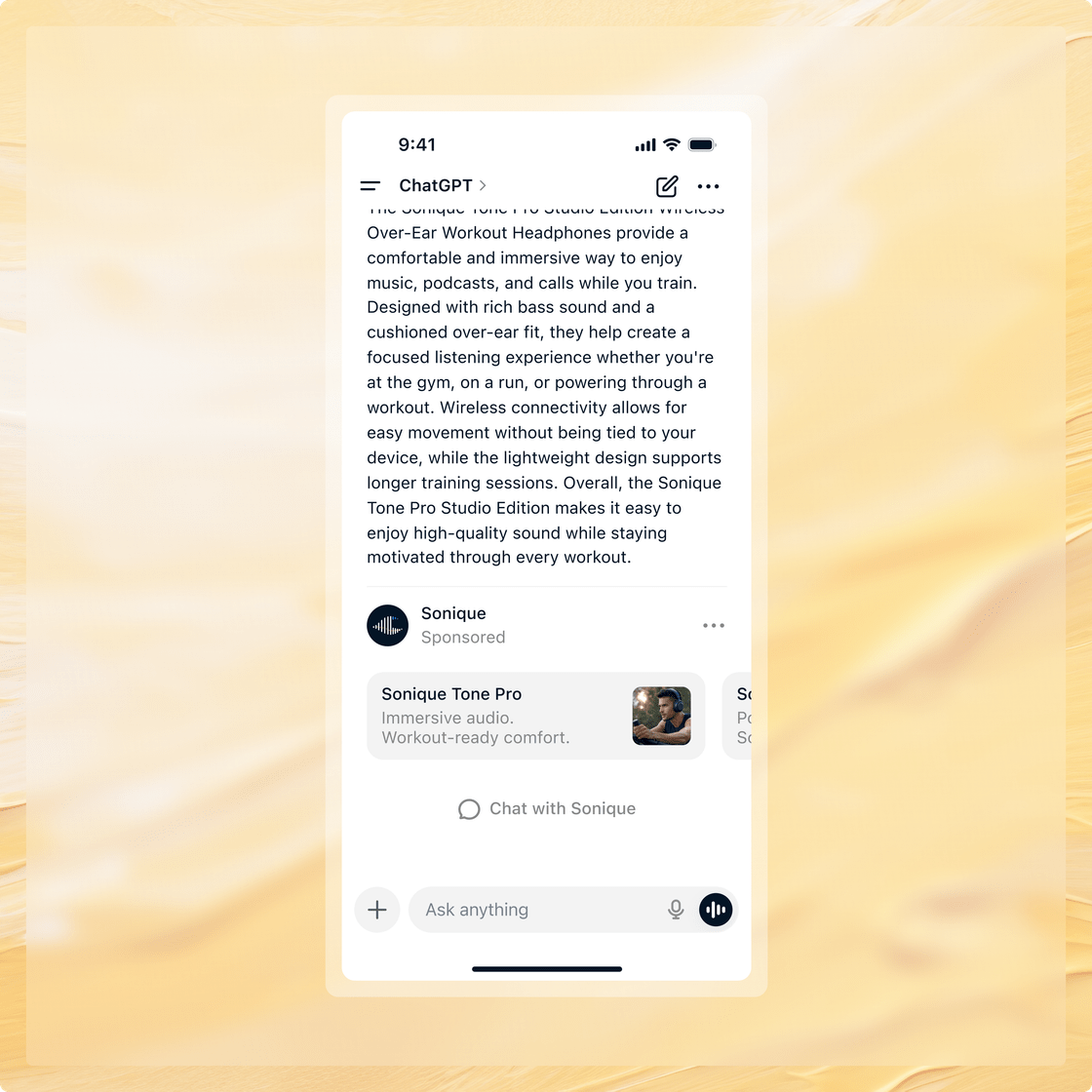
ChatGPT ad units carry a title, description, and image, a constrained format that rewards specificity over broad messaging. Winning brands don't run one-size-fits-all talk tracks; they personalize messaging to match the specific audience and question context.
[06] Landing pages: Audience-centric by design
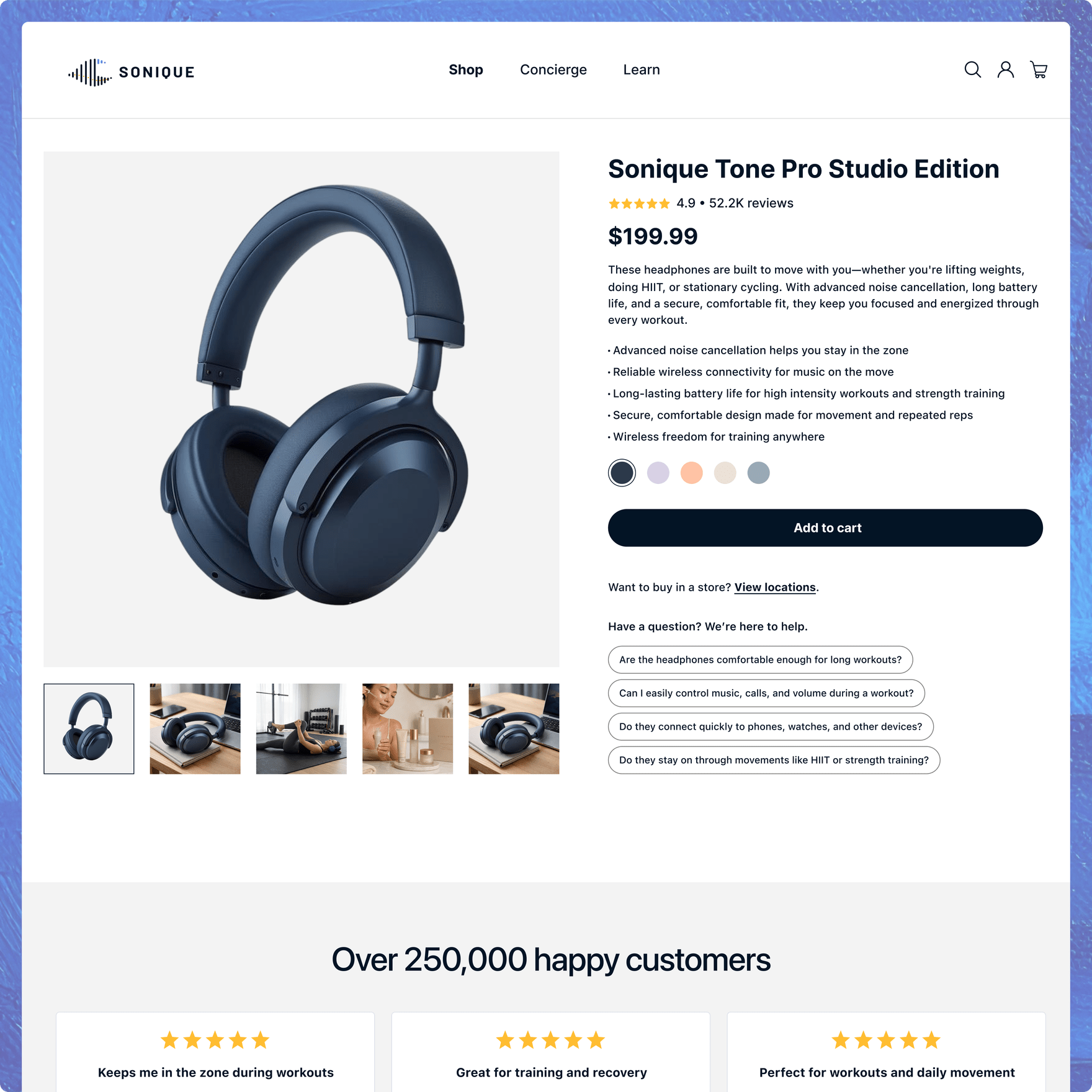
When a shopper clicks a ChatGPT ad, they leave the conversation and get redirected to your landing page experience. What happens after the click matters just as much as the ad itself. Stackline Pages helps brands build audience-centric landing pages that convert by aligning with the exact audience and intent that drove the ad interaction. Instead of sending every shopper to the same generic destination, Pages draws on Stackline's proprietary commerce intelligence — search volumes, AI shopping question data, audience signals, and more — to generate dynamic experiences tailored to each shopper's needs and purchase intent.
[07] Concierge: Conversational commerce at the destination
Once a shopper lands, Stackline's Concierge brings an AI-powered shopping assistant directly into the page experience. Trained on a brand's products, guidelines, and shopper data, Concierge helps consumers find the right items in a conversational interface that mirrors the AI-native journey they just had on ChatGPT. Brands can guide upsells, cross-sells, and subscriptions through marketing rules, and deliver personalized guidance at scale.

[08] Checkout: Commerce connectivity at the destination
Once consumers have made their purchase decision, it’s important for brands to offer them a seamless way to buy. Shoppers can complete transactions directly through a branded checkout experience, with one-click payment options and fulfillment routing through Amazon MCF, Walmart Fulfillment Services, and other leading networks. Alternatively, many brands choose to offer where-to-buy or store locator options with Amazon, Walmart, Target, and other retailers.
.png)
[09] Analytics: Measurement that closes the loop
On any emerging channel, measurement drives learning. Like other ad platforms, ChatGPT allows you to easily track impressions, clicks, spend, CPM, and CPC across all campaigns.
A significant recent development is the arrival of OpenAI's conversion pixel, formally launched in May 2026 alongside the self-serve Ads Manager. Placing the pixel on Stackline Pages closes the attribution loop entirely — it gives brands the ability to measure cross-platform attribution that connects ChatGPT ads to sales outcomes – no matter where consumers choose to purchase.
.png)
[10] ChatGPT app strategy: Own the conversation
Beyond paid advertising, OpenAI's app store gives brands an emerging opportunity to build dedicated ChatGPT apps, owned properties where brands can control the conversation, recommend products, facilitate checkout, and support consumers directly. In the months ahead, in-ChatGPT app destinations are expected to become an important landing point for advertising, letting brands keep consumers within the native ChatGPT experience. Stackline's Concierge can launch as a native ChatGPT app, giving brands a direct presence in the platform that goes beyond a single ad unit.
.png)
Start small. Learn fast. Build the advantage.
Every major advertising channel had a moment when the audience was large, the competition was thin, and the brands that moved early built advantages that lasted years. That moment is happening right now on ChatGPT. The targeting is maturing. The measurement infrastructure just got significantly better. The volumes are growing faster than any channel in recent memory. This is not the time to wait for the channel to be perfect, it's the time to get in, learn fast, and build the kind of expertise that's hard to buy later.
Ready to explore what ChatGPT advertising could look like for your brand? Schedule a meeting with us to learn how to get started, what the opportunity looks like in your category, and how to build a test that generates real learning.